With all that’s been going on with the virus, the nearest I got to my planned Alpe Adria trek this year has been four days in the Cairngorms in September.
But while four days is clearly not eight weeks, I’m a great fan of Scotland (this was actually my 22nd visit there) and when you get the weather it can be every bit as good as the Alps. Besides, my daughter lives there so it was great to spend some time with her too. But surprisingly I’d never been to the Cairngorms National Park before.
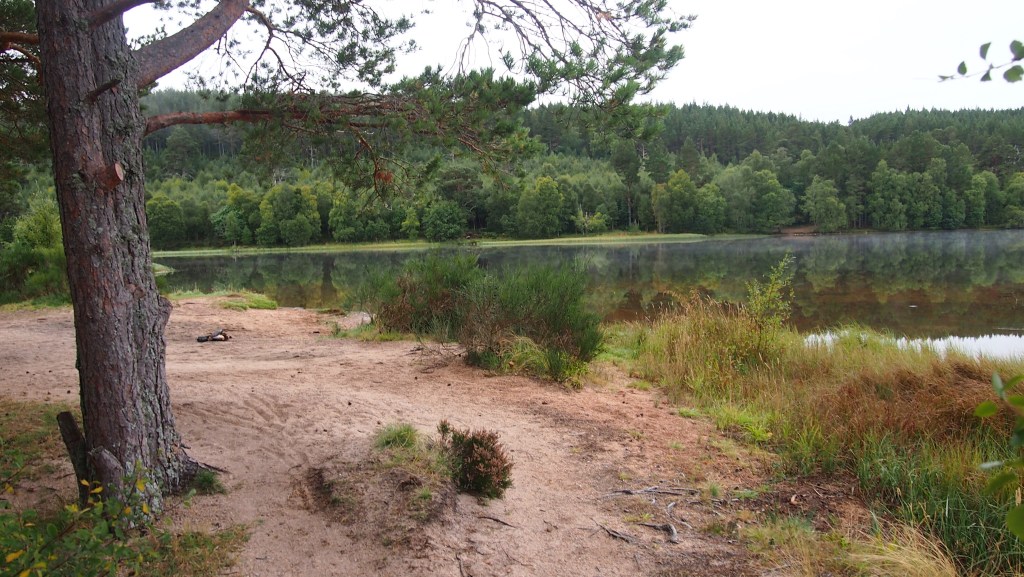
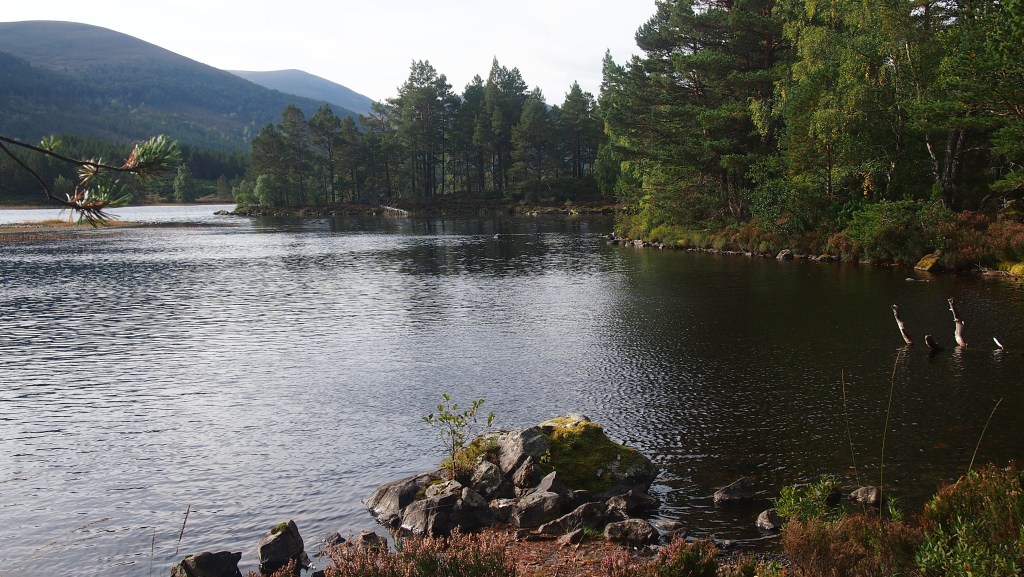
Straight off the Caledonian sleeper at Aviemore, I did an easy eleven mile circuit of nearby Loch an Eilein. What can I say. Gorgeous in every way, surrounded by the Rothiemurchus forest and with the backdrop of the Cairngorms to boot.
Loch an Eilein
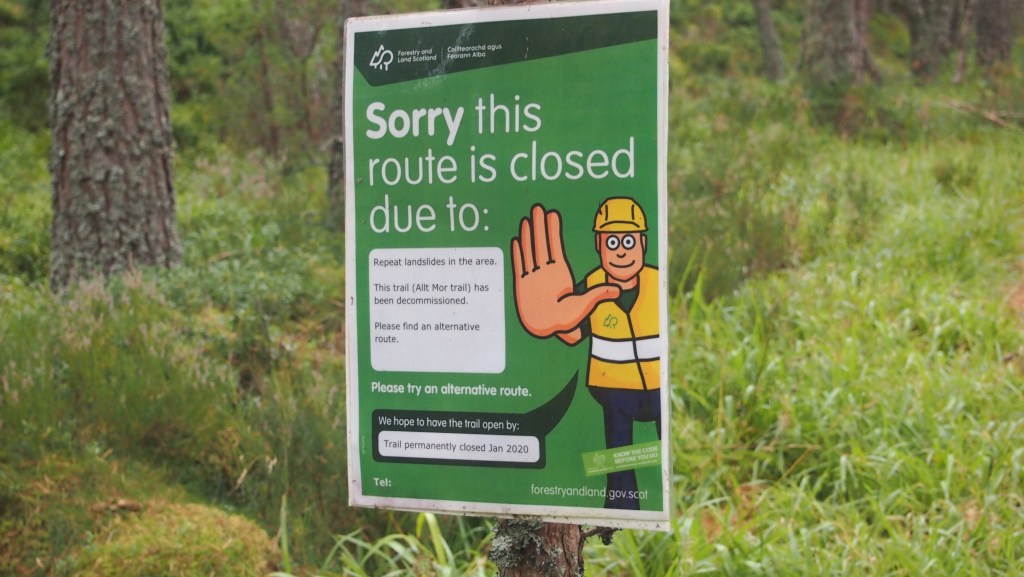
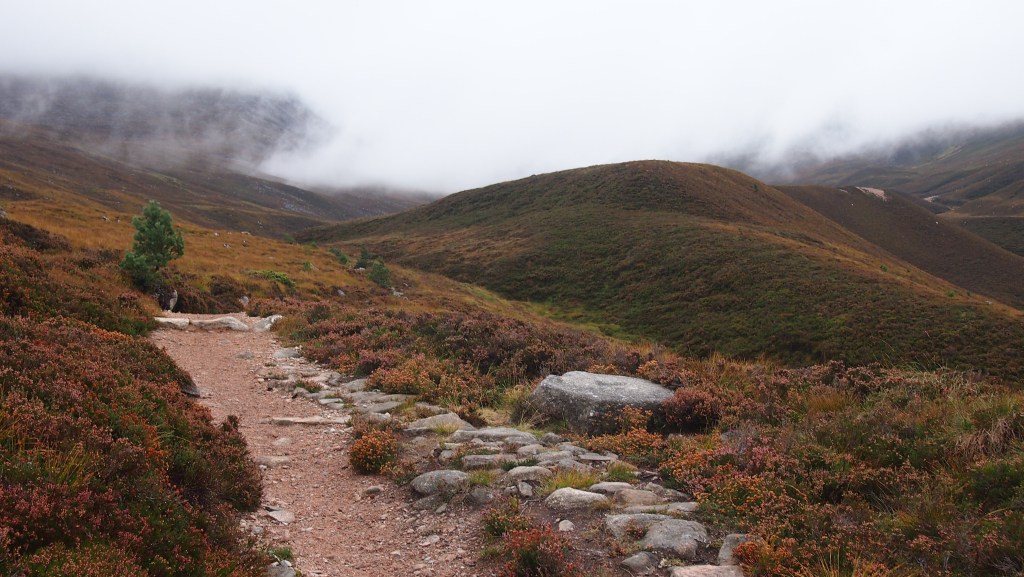
The next day things didn’t go quite according to plan. The closure of the Allt Mor trail meant my plan to walk the Chalamain gap and a little bit of the Lairig Ghru pass had to be replaced with a walk over the Ryvoan pass instead.
But this was beautiful in itself, passing the green loch of Lochan Uaine and then miles of peaceful moor and forest. And not a tough walk in any way.
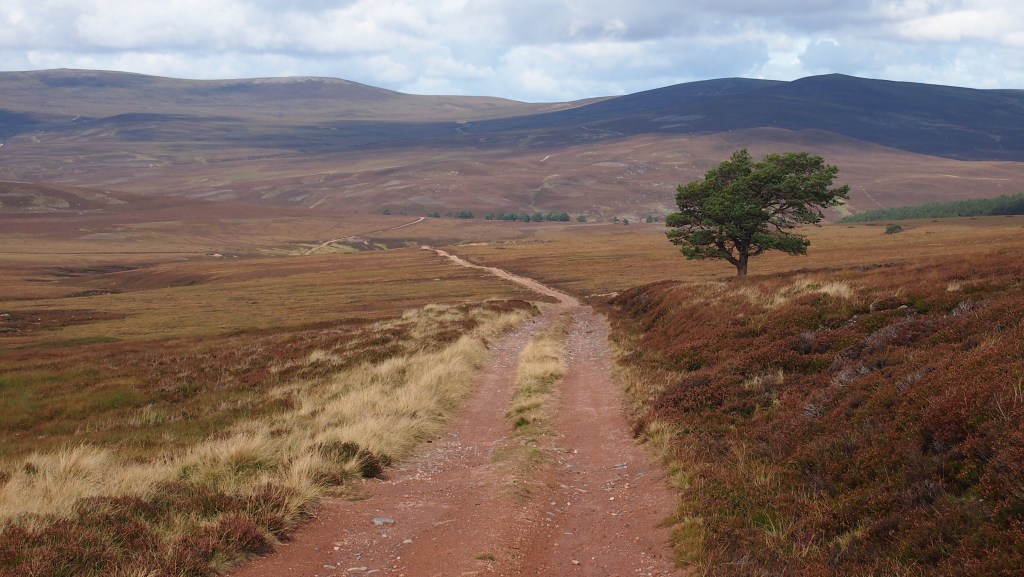
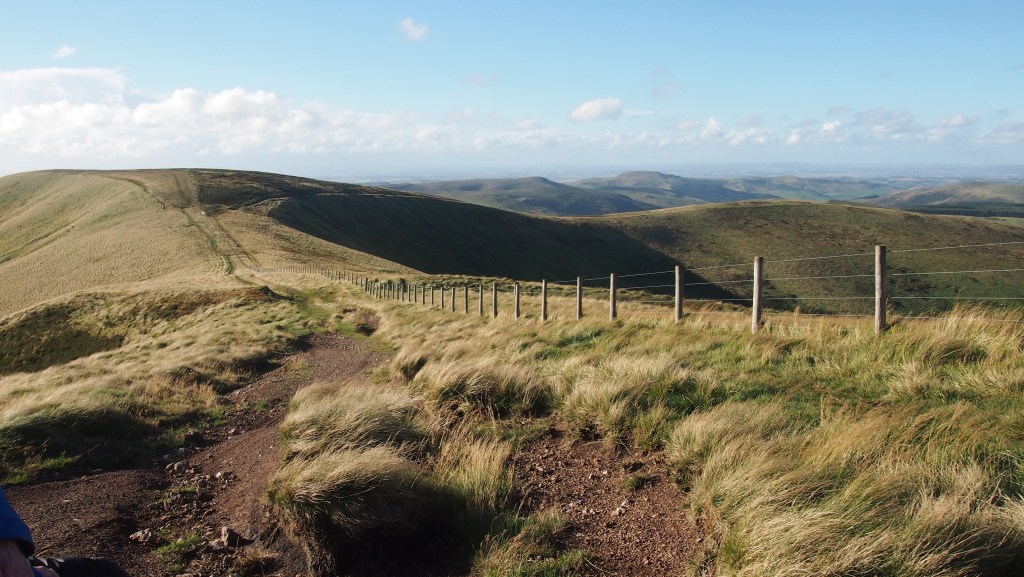
For a change on day 3, I opted for a long hill walk over the Monadhliath mountains, on the west side of the A9 and railway, from Aviemore to Carrbridge. Parts of this reminded me of the Pennine way, but with occasional trees, but the landscape changed several times over the course of 18 miles, ending on one of General Wade’s military roads. Highly recommended, if tiring.
Allt Ghiuthais
Finally, on my last day I managed to find an alternative route to the Lairig Ghru, via Loch Morlich. So while I’m not sure I’ll ever manage the two day trek from Rothiemurchus to Linn of Dee, it was nice to finally fulfil an ambition to walk a few miles of this legendary pass. Maybe I’ll manage a bit of the other end of it before too long!
On the Lairig Ghru
All in all I managed to pack in 54 miles of hill, forest, moorland and lochside walking in four days which can’t be bad. Aviemore as a base is easily accessible, and handy (but hardly frequent) buses allow you to access Glenmore and Cairngorm. So highly recommended for all types of walking with lots of flat forest trails as well as the hills.
Perhaps next time I’ll even have a go at Cairngorm itself.
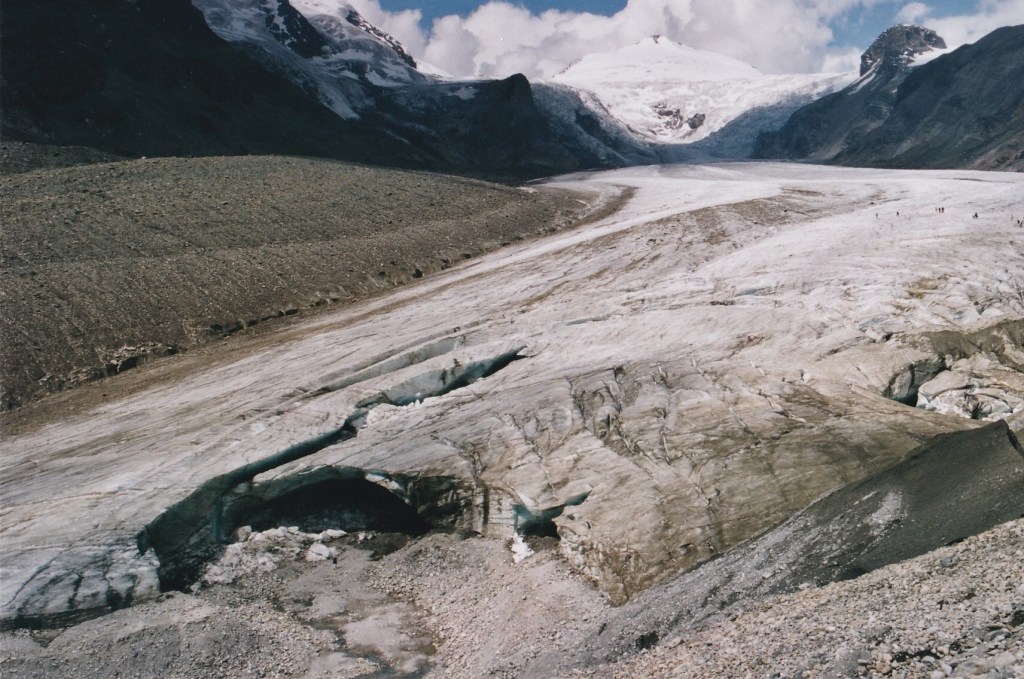
Today was the day I planned to start my Alpe Adria trail journey, from the Pasterze glacier in the Hohe Tauern National Park in Austria.
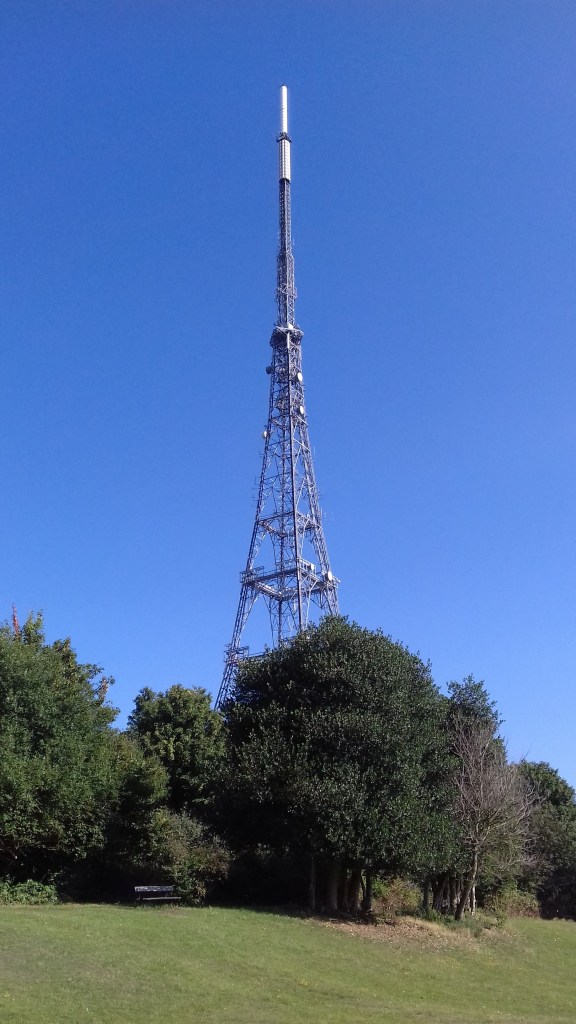
Instead I did my now regular two mile circuit of Crystal Palace Park in south London. Not
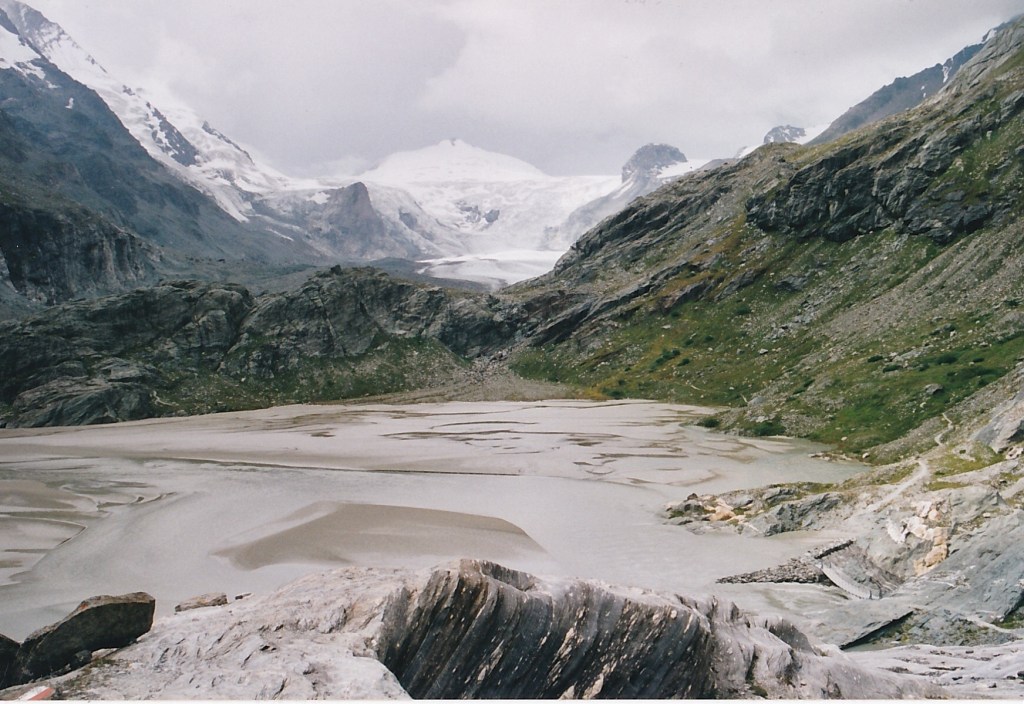
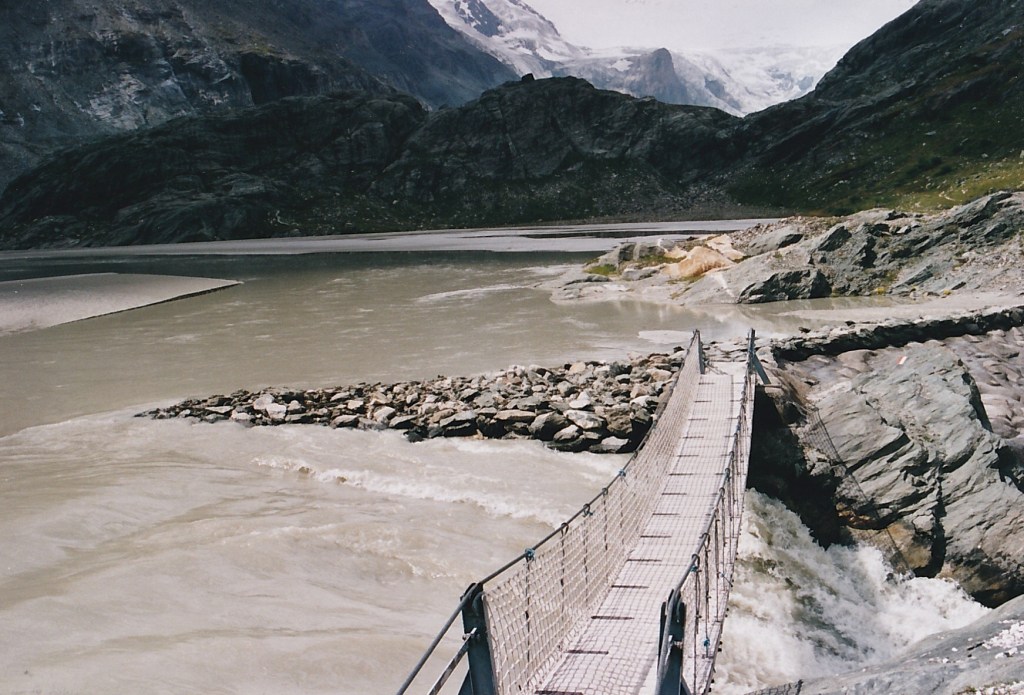
The Pasterze glacier, when we last visited, in 2002
But this
The Crystal Palace tv transmitter, near the site of the Crystal Palace
And no, I didn’t climb up the mast, just to the top of the hill, a mere 109 metres above sea level, but still one of the highest points in London. Compared to the start of the Alpe Adria Trail at 2576 metres, which is just a little bit more spectacular. Never mind, I hope to be in Austria for a postponed start to my hike in 13 months’ time.
At least my 1000 mile target for 2020 is now (nearly) back on track. As of this morning I’ve logged 564 miles outdoors since 1 January and have two more hikes planned for this week. If I can keep up for another year should put me in reasonable shape for the 470 miles of the trail next year. 1000 miles in a year is a worthwhile and feasible target for anyone who’s is reasonable shape I think and certainly motivates you to keep active.
As I write, we are six weeks into the UK’s lockdown and any walk beyond the local park seems now a distant memory. What better time to relive favourite walks and look forward to the time when we’re able to put on our boots and explore our beautiful country once more.
As with my past top ten, these are all walks I have done, and it’s a totally subjective choice. This time I’ve limited it to the UK and you’ll see that the majority are in the north and west where our biggest hills, lakes and mountains lie.
10. Ash ranges, Surrey
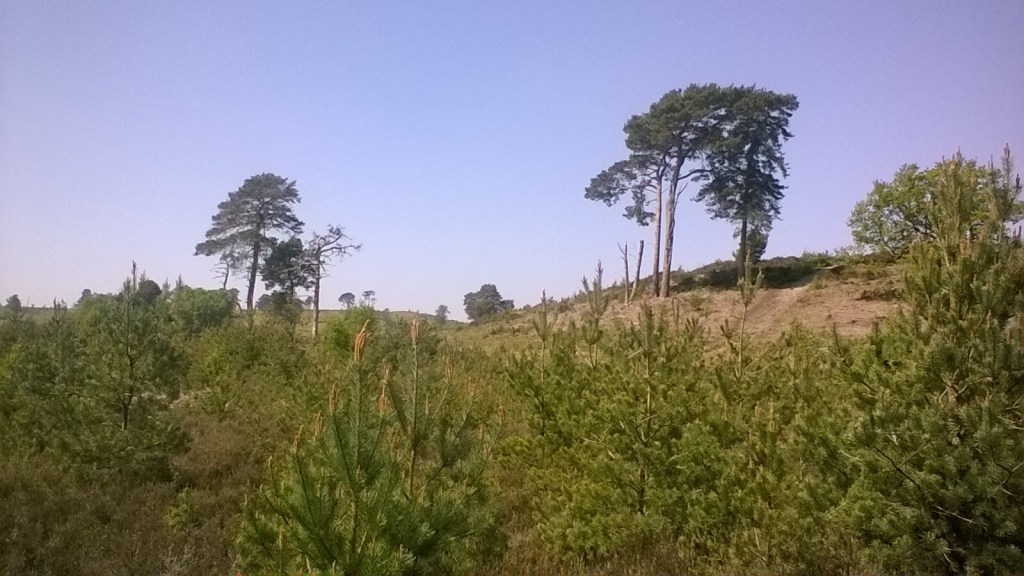
The wild Ash Ranges are only open late afternoon and bank holiday weekends
The Ash ranges are a well kept secret, not least because they are used by the Ministry of Defence most of the year for training purposes. But bank holiday weekends, usually, they are open all day and the last two years I’ve taken advantage of that to visit.
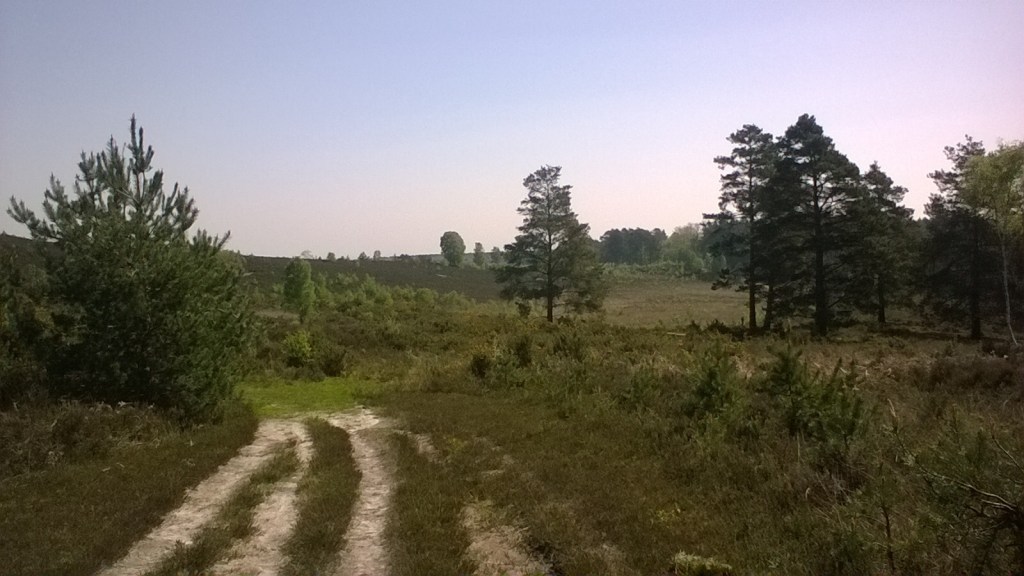
What a marvellous revelation they are. Unspoilt, beautiful – and when I have visited- largely empty, they are a wonderful example of Surrey heaths, and remind me of a sort of New Forest or even Scottish landscape. But they are between Guildford and Aldershot, just an hour from central London.
No footpaths are marked so wander or take a GPS!
There’s a great walk around and across the ranges which takes all day and is highly recommended..
9. Claife Heights, Windermere, Cumbria
Close to Windermere, but surprisingly quiet
This one’s in the heart of the Lake District, starting on the banks of Windermere, but not going to any of the big fell tops. You catch the ferry from Bowness, close to the hugely popular Beatrix Potter cottage, but leave all the tourists behind with a short sharp climb to a sylvan landscape of woods and moss, pools and flowers.
Climbing further you get some wonderful views of Windermere. You can head back down to the banks, but I chose to walk down into Hawkshead village.
View down over Windermere
8. Cheviots, Northumberland
The English/Scottish border
I first heard of the Cheviots as a child, doing and redoing a jigsaw I had of the British Isles. It took me another 50 years to make it there, and what a landscape. The scale is breathtaking, with 360 views of the grandiose hills that from the border between England and Scotland.
My friend Keith and I were in the third year of our walk along the Pennine way, a walk that in the past had something of a fearsome reputation for boggy marshes. We loved it, and were incredibly lucky all three years with September weather.
Near Windy Gyle
Yes it was boggy in places, but a lot has now been sympathetically surfaced with reused paving stones from old mills, which both make the walking easier, but somehow look as if they have always been there. There are lots of other highlights, including Cross Fell , High Cup Nick and Teasdale and it’s a tough walk, but well worth it. The last days on the England/ Scotland border are stunning. There’s a particular part near the end, aptly named Windy Gyle, where you nearly get blown off your feet!
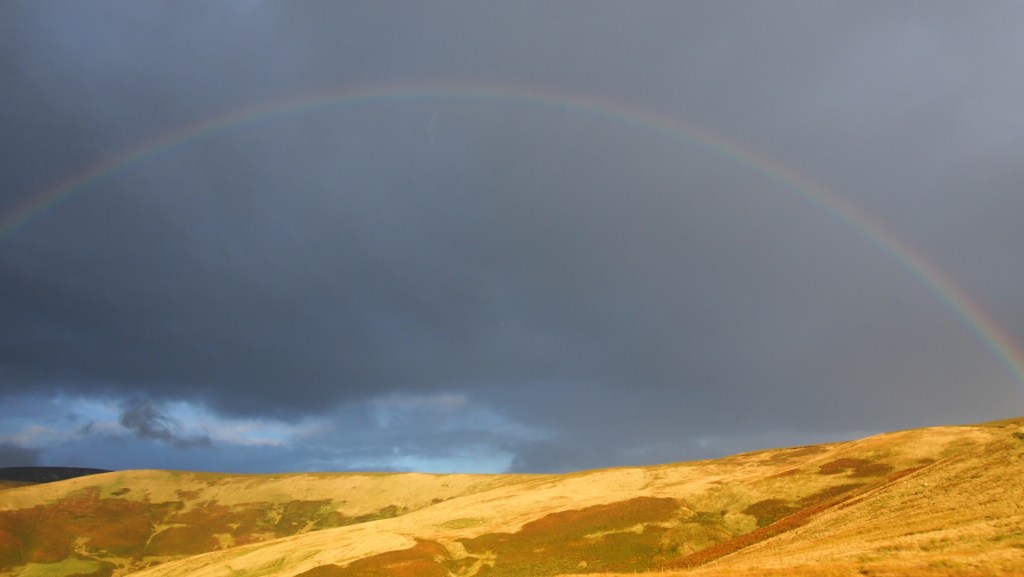
Rainbow over the Cheviots
7. Lochaber and Nevis Forest, near Fort William, Scotland
It’s a long walk to Fort William
Shortly after Jeni and I were married, we embarked on the West Highland Way. It wasn’t exactly a honeymoon- we’d already had that- and the fact that Jeni has yet to do another long distance walk with me since tells you it wasn’t quite her thing. But we’re still married, 23 years later!
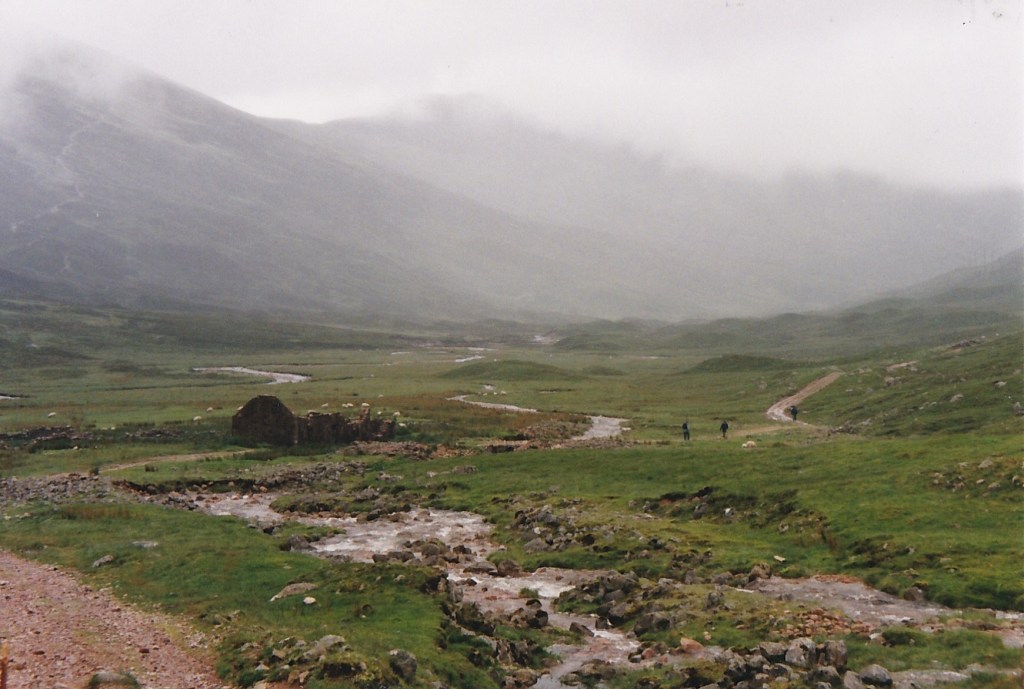
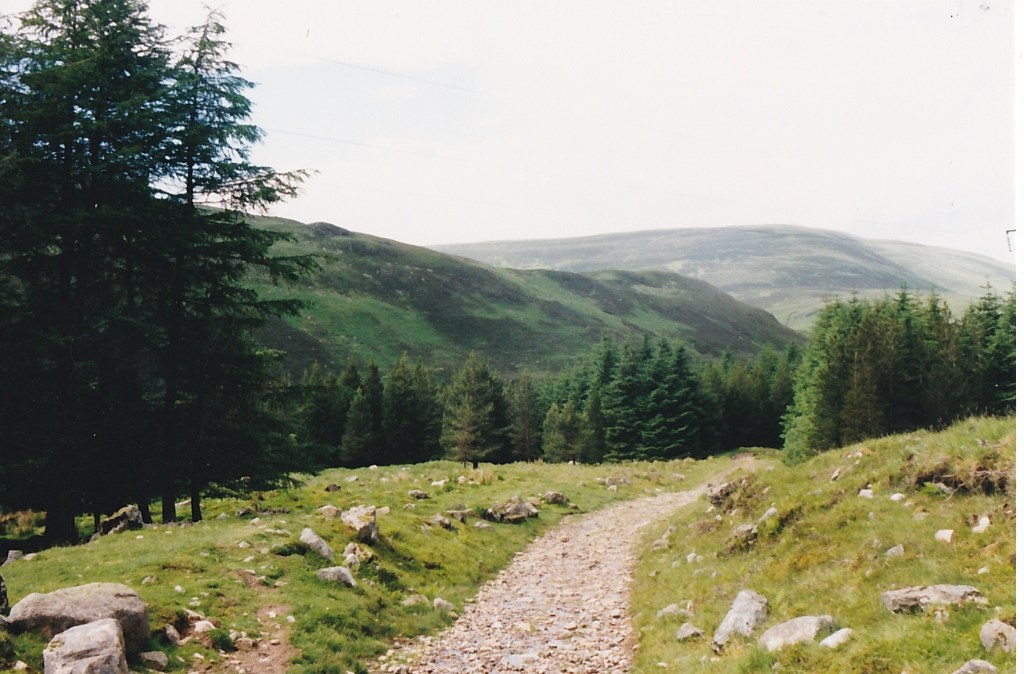
The last day of the West Highland Way is a long tough one, and we began in rain, then mist before the sun came out and it was really quite warm- a typical mix of Scottish weather. You start in Kinlochleven, an old aluminium smelting town, and climb out of the town through the forest, before walking high in the sheep hills. You go through deer country and then Nevis forest eventually descending into Fort William. When we did it we were the last people of the day and due to a misunderstanding our B and B reservation had been given up for someone else. Luckily the landlady booked us another place a few doors down as we were done in after walking about 18 miles.
Approaching Nevis forest
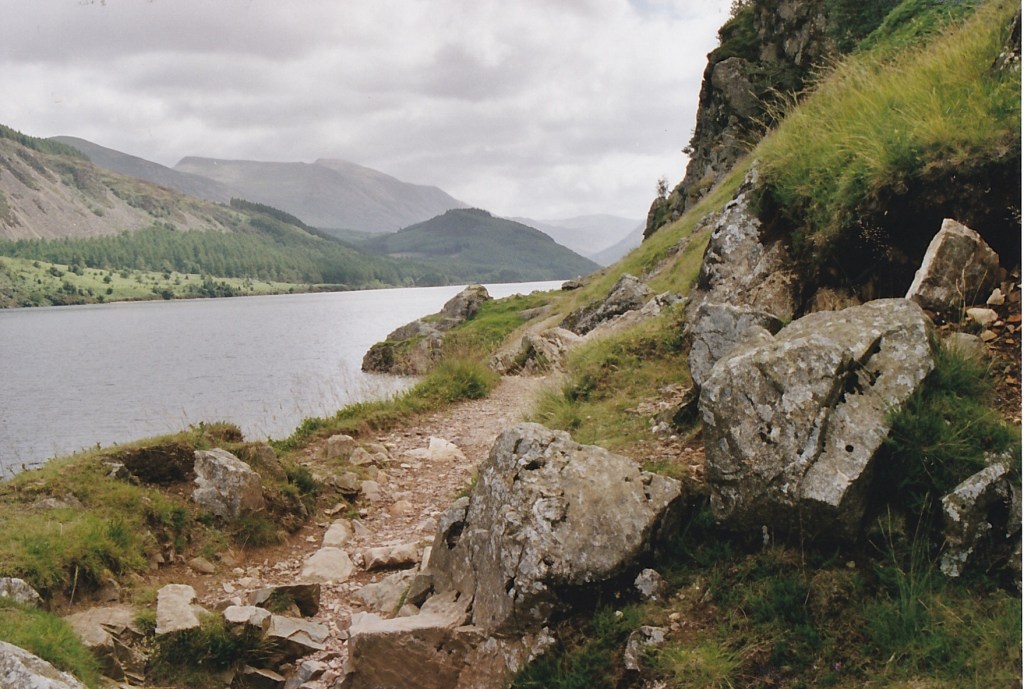
6. Ennerdale Water, Cumbria
This is in the less explored western side of the Lake District and had it not been for Alfred Wainwright’s coast to coast walk, this walk may have stayed little known too. Wainwright bemoaned the plantations that had taken over the valley beyond Ennerdale, but I quite liked them, although I hear that they are now being thinned out or removed.
The rocky walk along the bank of Ennerdale Water
Ennerdale is beautiful, and beyond that going east, there’s a flat valley section, the part that was wooded when I was there nearly 20 years ago now. Passing Black sail hut, the most remote youth hostel in England, there’s a stiff climb north followed by an amazing rocky plateau with breathtaking views in every direction.
So lovely that I lingered here too long and arrived very late at my accommodation that night in Rosthwaite, nearly missing dinner.
Near Honister pass
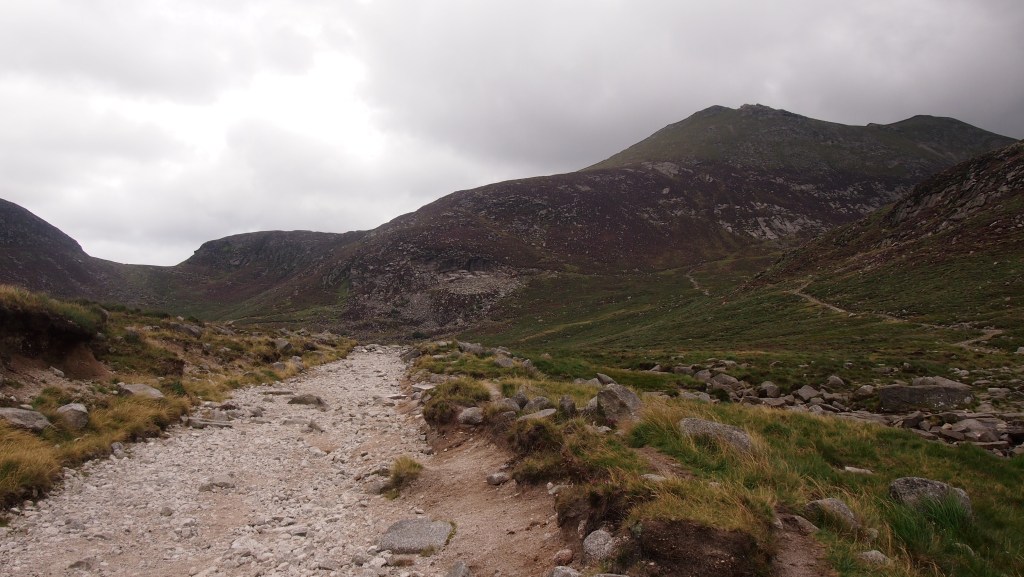
5. The Brandy Pad, Mourne mountains, Northern Ireland
The approach to the pass
I did this walk with my daughter Rachel, and on the whole I think she really enjoyed it , bar a little bit near the top where it was quite blowy and what happened at the end….
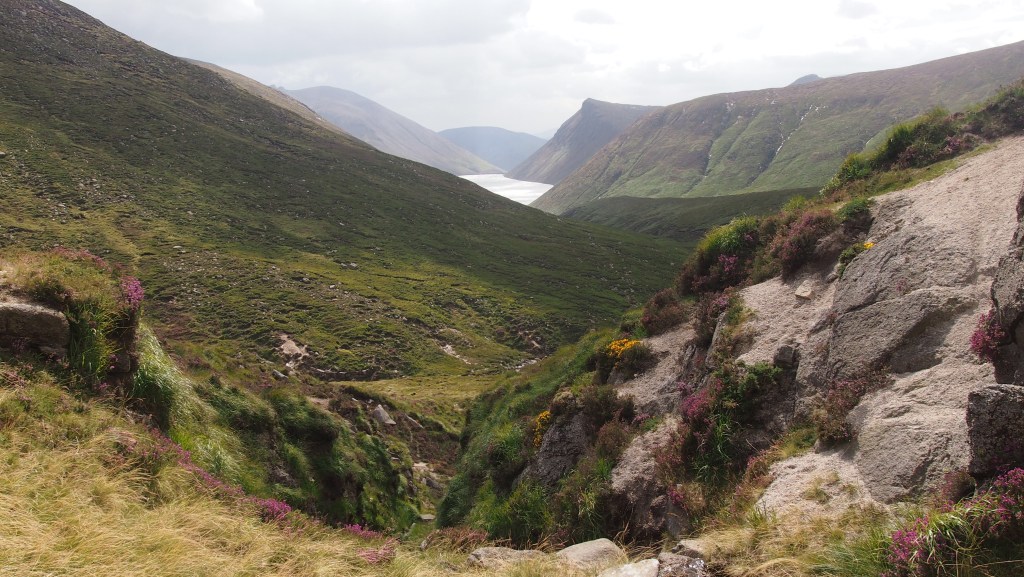
The landscape is reminiscent of the Lake District, but it’s in the compact range of small mountains, the Mournes , on the east coast of Northern Ireland, near Newcastle. I’d done some walking in the Wicklow mountains, south of Dublin, but this was the first time we’d walked in the north and it was beautiful, and I think to many, is much lesser known.
View to the reservoir
Unfortunately the walk didn’t end quite how we’d imagined. With the path totally blocked behind a drystone wall by Highland cattle, we took what looked like a decent path, albeit marked prominently with ‘Private: keep out’ signs. Then we were accosted by a quite intimidating family of donkeys, had to climb over a wall covered in barbed wire and glass, before being shouted at by an intimidating Ulster farmer who seemed ready to get his shotgun out had his wife not already let us through! By the time we got to the pub and were telling the rest of the family the length of the Highland cattle’s horns had grown in my imagination, as if they were Texan longhorns. Rachel never lets me forget that!
On the descent from the Brandy pad
4. Galloway forest park, Scotland
Loch Trool
The borders of Scotland , and the long distance coast to coast walk across them, the Southern Upland Way, are a largely undiscovered delight. Choosing a day walk from fifteen days walking along the route is difficult, but I this was certainly one of my favourites, if not the best, from Bargrennan along Loch Trool to Clatteringshaws.
Galloway forest park is a beautiful area and in May it was at its best. We picnicked by the loch and passed onto another loch, Loch Dee, before being met at Clatteringshaws loch. Without this it would have been a very long day, but we were able to resume the next day from the same spot.
Loch Dee
The Southern Upland Way is much underrated and one of the UK’s very best long distance trails.
I remember it being very warm as we climbed this hill
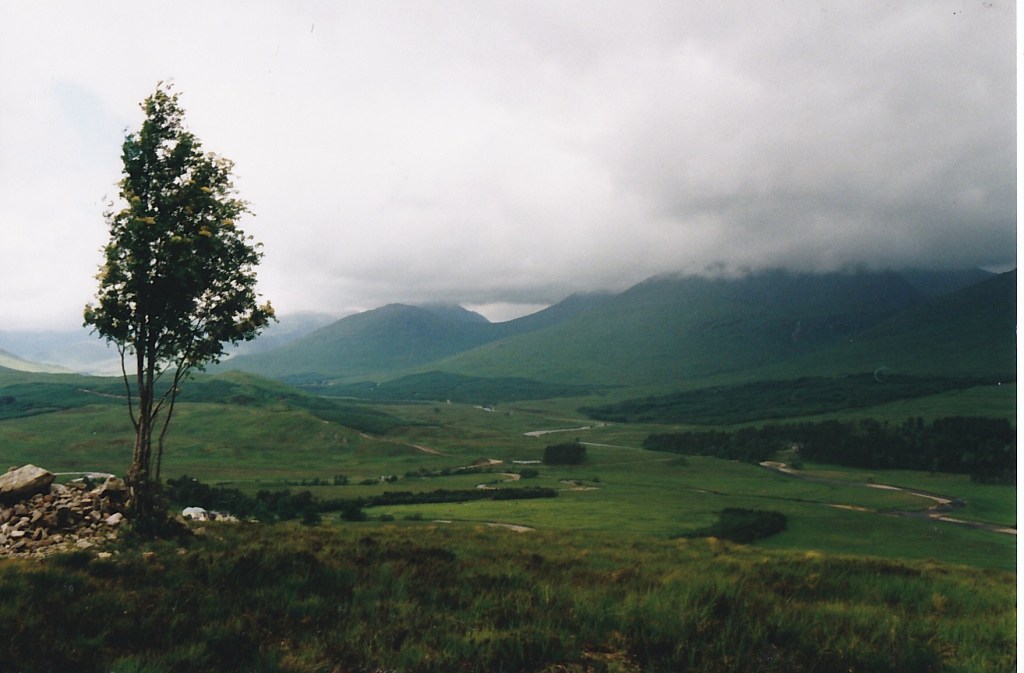
3. Rannoch moor, Scotland
The bleak but beautiful Rannoch moor
The first time I saw Rannoch moor my jaw dropped. I wish I had been a professional photographer and able to capture the sheer desolate beauty of it that June evening, after heavy rain, with dark clouds as my friend Ben and I drove across it on my very first visit to Scotland in 1992.
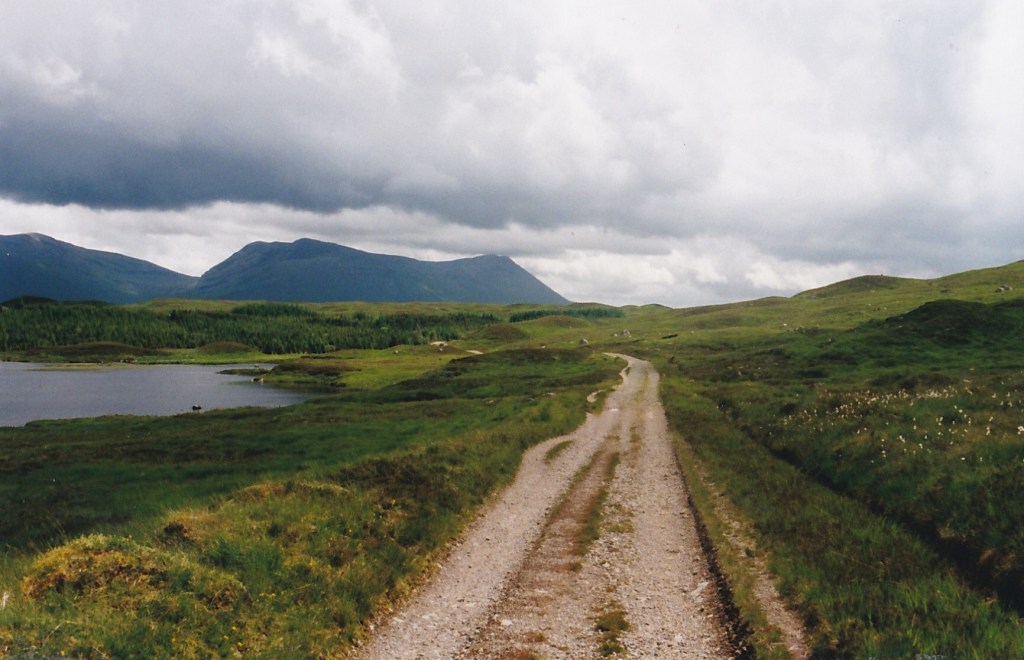
Since then Jeni and I have walked across it, on the West Highland Way, and taken the sleeper train from Euston across it several times, and that wonder has never left me. Whether you take the road, walk or take the train, all three routes are worth doing and I’m sure I’ll be back.
The West Highland Way, across Rannoch moor
We ended our walk across Rannoch Moor at the Kingshouse hotel, a stopping place since the days of Wordsworth, and at the time of our visit somewhat ramshackle and quirky, but in stunning scenery, with deer coming down to feed on scraps in the evening. I hear the hotel has been redeveloped now, but I hope it keeps some of the atmosphere.
2. Haystacks, Cumbria
Climbing up Haystacks
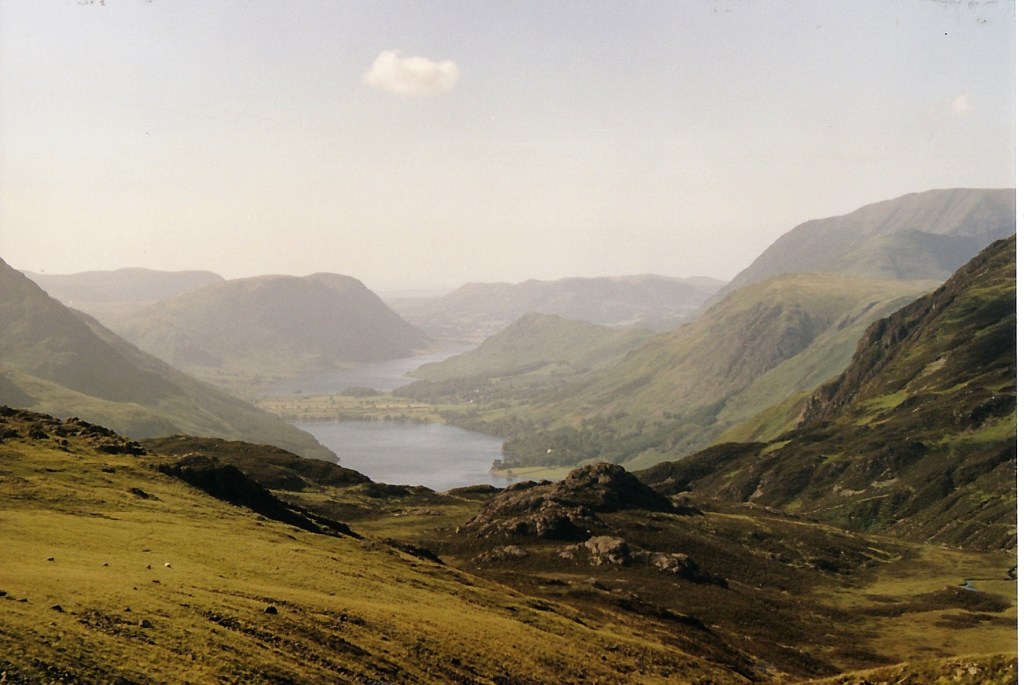
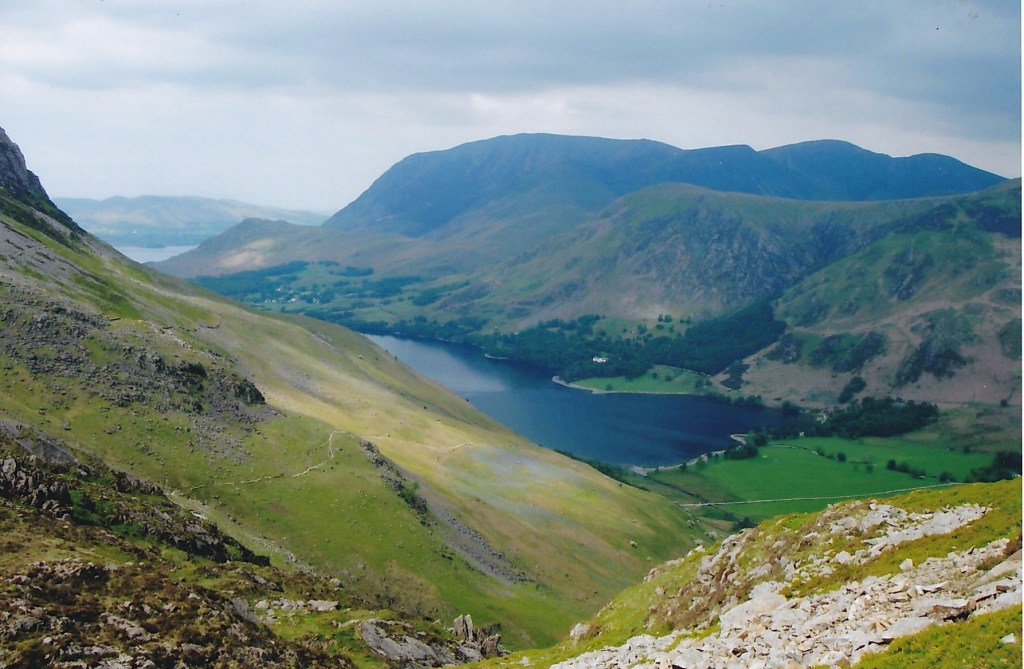
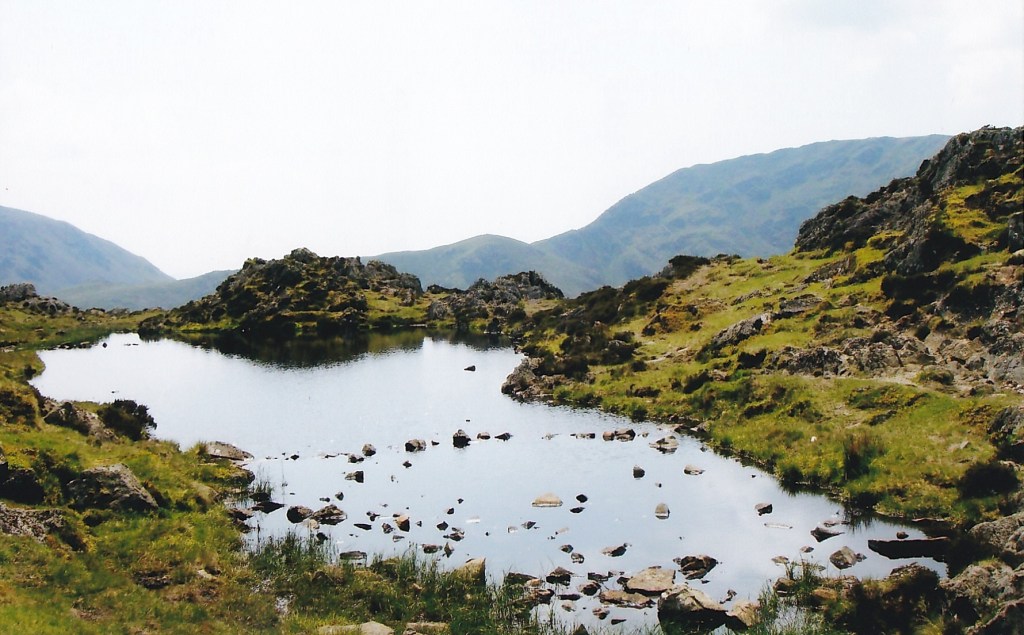
Unlike some of the others, this is a firm favourite with many , and you won’t have it to yourself. But I can see why it was Alfred Wainwright’s top fell, and he should know. His ashes are scattered there. It’s a stiff climb, but worth it. After the top there are series of beautiful tarns, before descending to Buttermere, which you can see from the top.
It’s close to Ennerdale and Honister ( and my number 6 walk above) and has stunning views.
Mountain tarns near the top of Haystacks
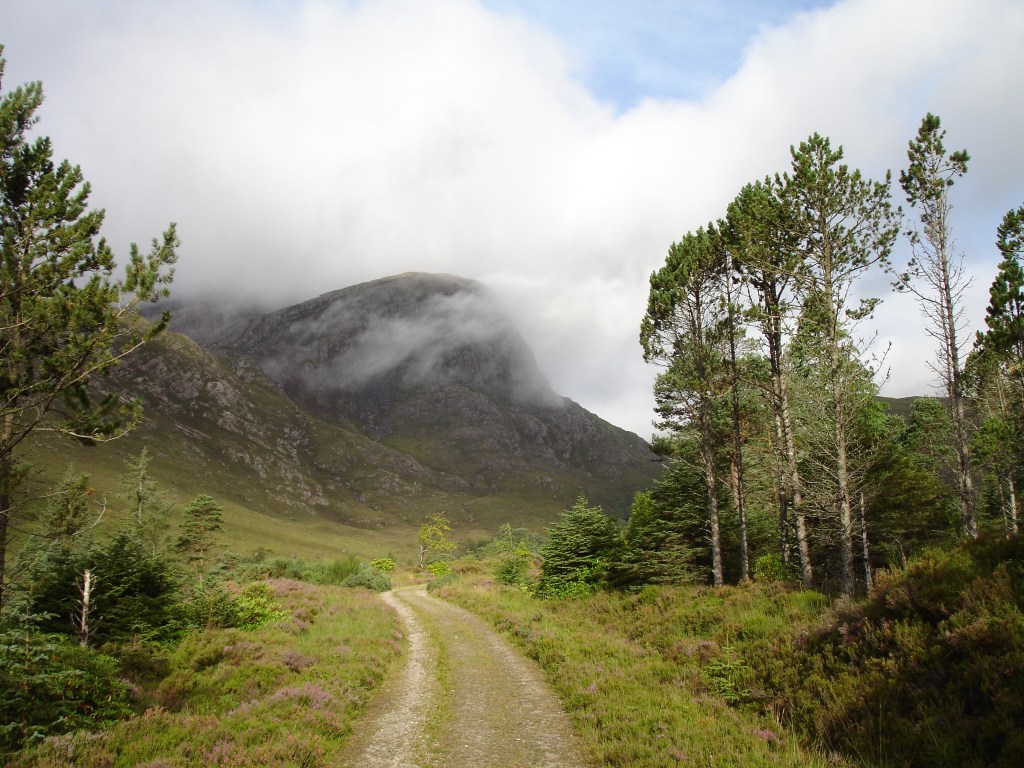
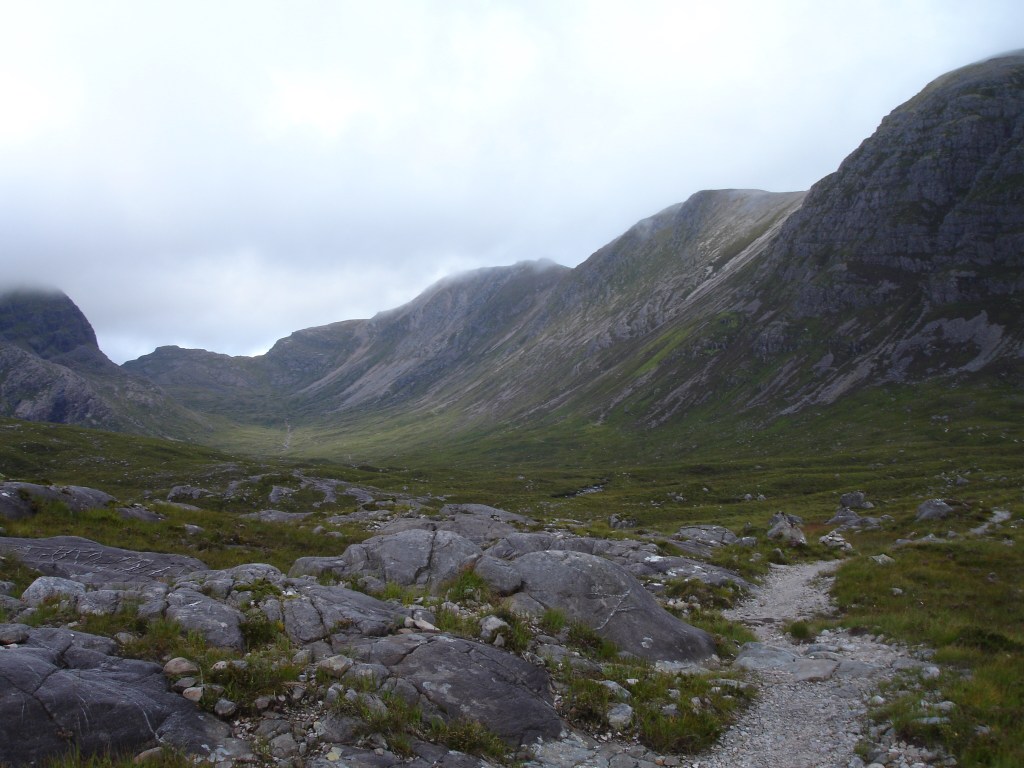
1. Achnashellach, Scotland
Near Achnashellach station
I have an old friend, Dave Kincaid, to thank for this one. He told me about it years ago, singing its praises, and he wasn’t wrong. Staying at the beautiful village of Plockton a few stops down on the railway, I caught an early morning train to the ( request ) stop of Achnashellach. There’s a couple of houses there and then you’re straight into the wilderness. In the early morning, with dew glistening on the bracken, it was magical. You climb up and then it’s an easy circuit down along forest tracks.
Towards the top
The view keeps changing. But it’s all beautiful. And then you loop back to the station. Although you have to make sure of your times as there are only three or four trains a day and you have to clearly signal to the driver.
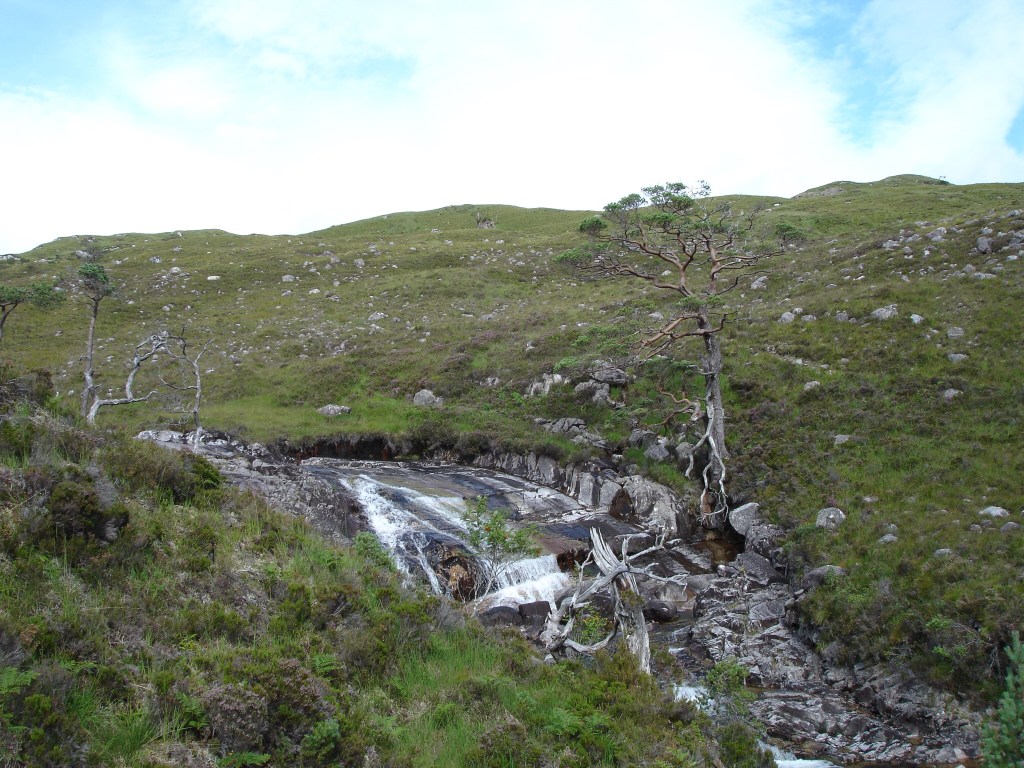
Descending by a river
Well, that’s my selection. Lots of great walks, but lots I had to leave out. Can’t wait to get the boots on again!
Well things often don’t turn out as planned, and in the case of 2020 and coronavirus that must be true for just about everybody. With Italy and other parts of Europe still at the centre of the coronavirus pandemic, it seems increasingly unlikely that I’ll get to walk the Alpe Adria trail this year.
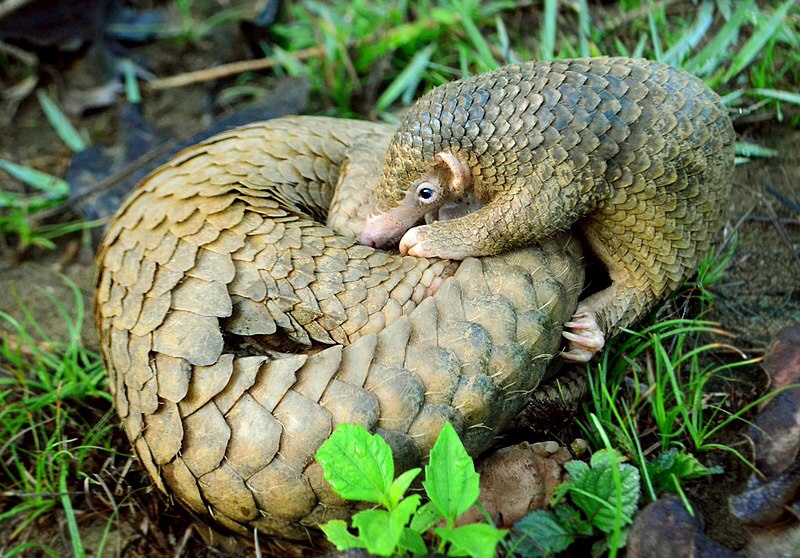
When I do eventually do the trek, I still aim to raise money for and awareness of the plight of the pangolin, the most trafficked animal in the world.
I’m no scientist but it is interesting to see that one of the theories that has emerged in recent weeks as a potential source of Covid-19 is the link to the pangolin.
Recent articles in ‘National Geographic’, and ‘Nature’ magazines suggest that bats and pangolins may be the means of transmission of Coronavirus to humans. The BBC reports that two groups of coronaviruses linked to the one behind the human pandemic can be traced to Malayan pangolins smuggled into China, according to Dr Tommy Lam of the University of Hong Kong. He is quoted as saying that sales of these wild animals in wet markets should be strictly prohibited to avoid animal to human transmission.
There are also reports that despite these fears, such ‘wet markets’, potentially the source of previous outbreaks of SARS, have in some cases reopened since the initial shutdowns in China.
Certainly it seems clear that there is some risk. So at a time when we are all focused on the impact of the current crisis on the human race , stop to think that it is quite possible that human greed has not only endangered these beautiful and unique creatures, but may also have caused human disaster few could have imagined.
Let us hope that further research, government action and changes in human behaviour can help end the trade in pangolin meat and scales so that these creatures can live the peaceful life they deserve.
I still hope that when I do get to do my trek, I can raise funds to help the pangolin. In the meantime , if you want to help, please click the link at the top of my blog ‘save pangolins’ . Thank you.
This isn’t as easy as it sounds. Over the last 25 years or so, by my reckoning I’ve done nearly 700 day walks. So picking a top 10 is far from easy. But here goes.
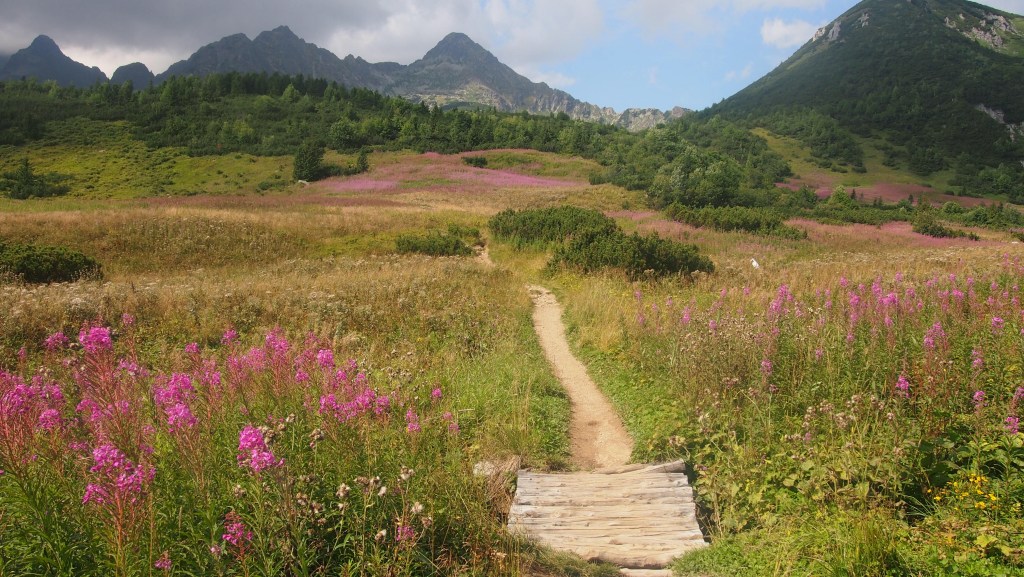
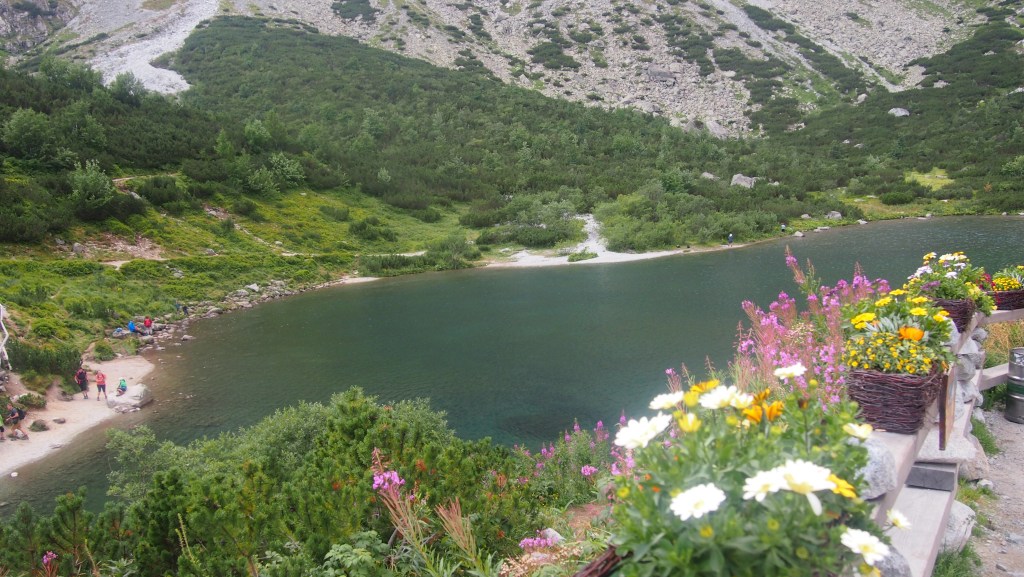
10. Tatranska Kotlina to Biela Voda, Tatra mountains, Slovakia
Jeruzalem, Belianske Tatry
The most recent of the Top 10 walks, one I did only last summer, when we stayed in the Slovak Tatras at Stary Smokevec. This walk is beautiful, and apart from a steady climb through the forest, not too tough. I was a little unnerved to read just beforehand though that it was a favoured area of Brown bears, and also to find that much of my time I was alone. So I spent three hours walking while singing constantly ( mainly Colonel Bogey!) to deter any chance encounters. Believe me this is surprisingly tiring. The only encounters I did have , though, were with the occasional Slovak walker in the other direction who must have thought me a bit eccentric.
Zelene Pleso
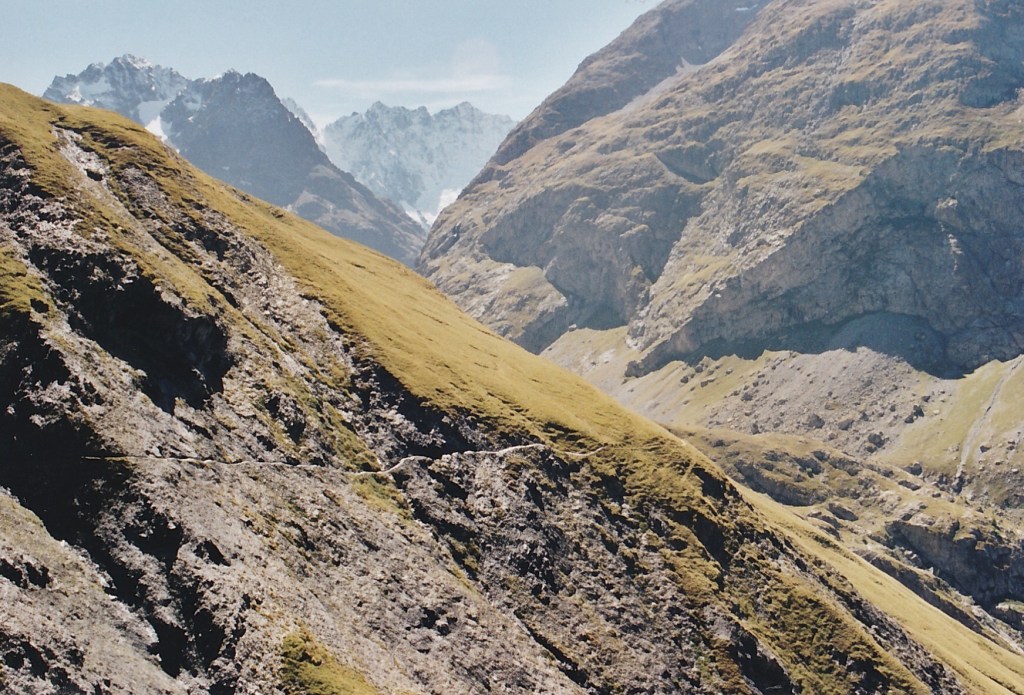
9. Sentier Des Cresvasses, Les Ecrins, France
The narrow winding Sentier Des Cresvasses
This walk is a ‘balcony’ walk, by which I mean it hugs the contours and stays relatively flat, but has at times quite a big drop to one side. The views are worth it though, as you follow the Romanche river from the Col de Lauteret towards the Refuge de l’Alpe de Villar d’Arene. You cross to the other side of the valley and walk back up. The Ecrins National Park is beautiful, and not as developed as some other parts of the Alps, not far from Grenoble.
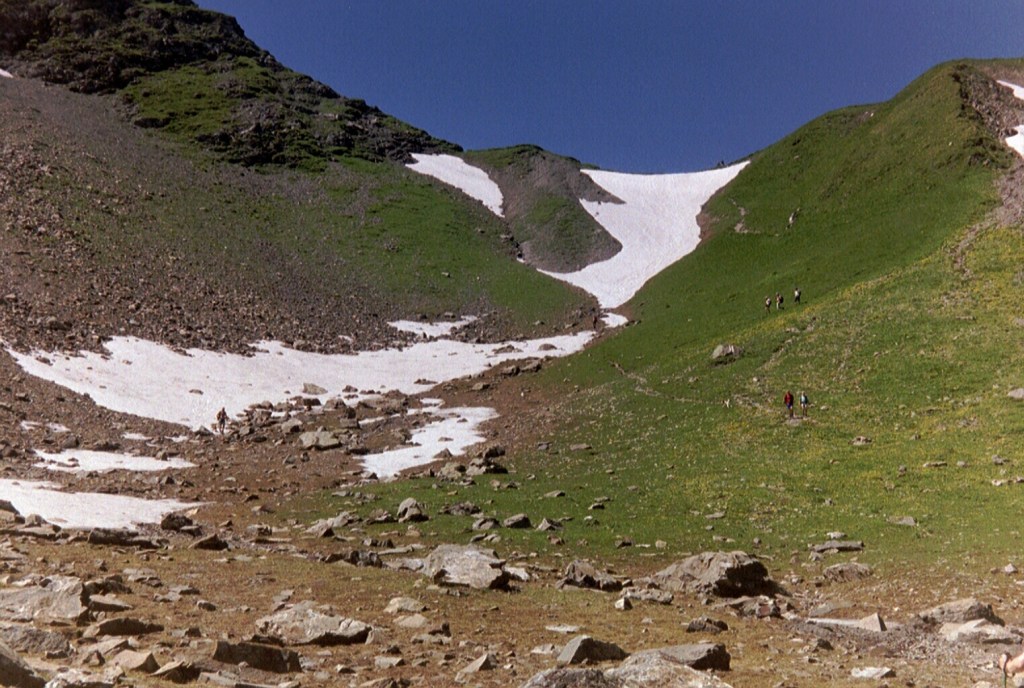
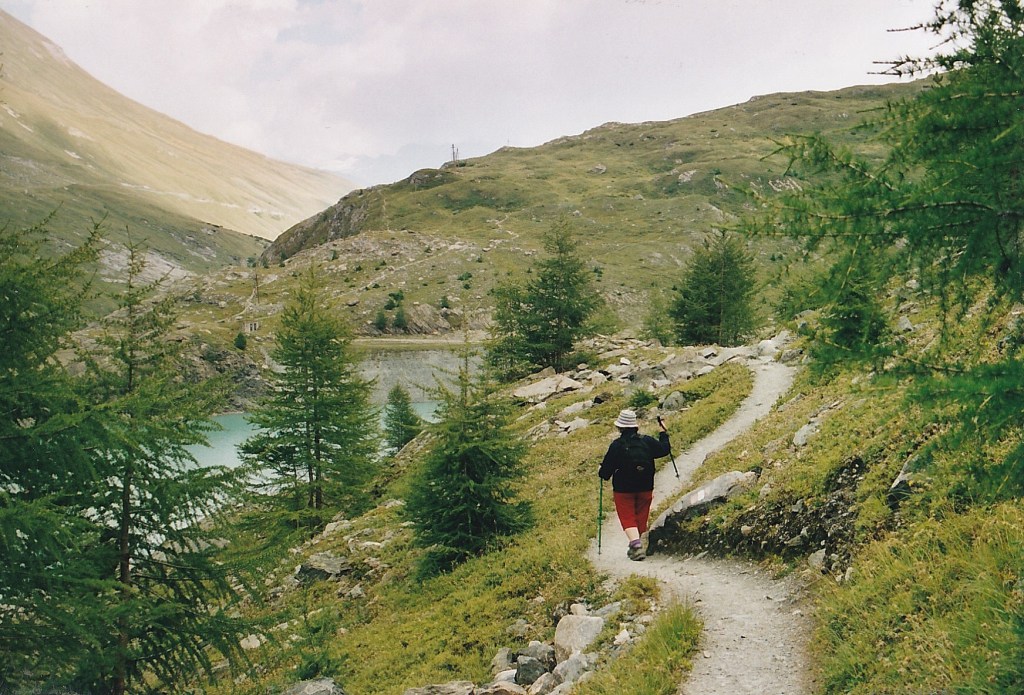
8. Richetlipass, Alpine pass route, Switzerland
The final climb to the pass, still with patches of snow in late July
I walked this pass as part of my intended traverse of Switzerland, from east to west, via the Alpine Pass route, in summer 2004. On this particular stretch I was accompanied by my friend Keith, with whom I’ve shared many a great walk, but who at this time was a complete walking novice, so didn’t know what he was letting himself in for! This is one of the few times we’ve walked carrying our all our gear, and it was tough, especially the final climb across the snow in this picture, where Keith made it up first, but I struggled and slid back.
Once on the either side the terrain changed and we had one of the longest and in places steepest descents I’ve ever encountered. It just seemed to go on forever. But beautiful, nonetheless.
The other side, walking down.
7. Faja de Racun, Ordesa Canyon, Pyrenees , Spain.
The stunning Ordesa Canyon, one of the deepest in Europe
I actually first saw this on tv , but in real life it’s even more amazing. Having already been to the French side, the Spanish is very different, and certainly hotter.
The Faja path is another balcony path, very high up, and I did suffer from a bit of vertigo on this one. Again I was with Keith, who took it all in his stride. But we decided not to do the faja the other side of the canyon the next day, as I’d somewhat lost my nerve.
Descending to the canyon valley
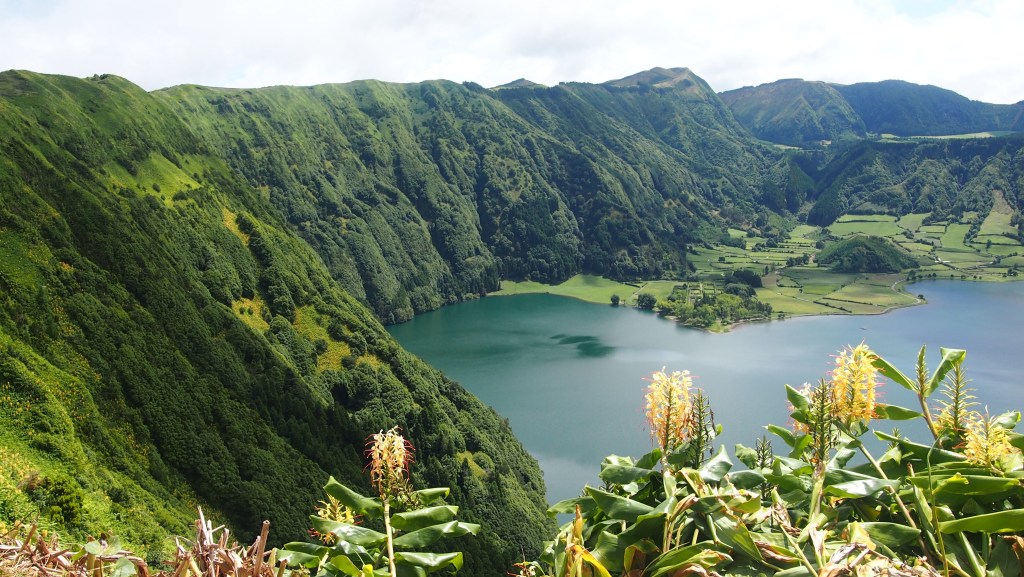
6. Sete Cidades, Sao Miguel, Azores, Portugal
Walking round the rim of the crater
This one is very different. An easier walk, once you’d climbed to the rim of the extinct volcano, now a lake. The flowers, as throughout the Azores, brought colour to the landscape. We were lucky that the initial fog cleared so that we had some stunning views. My wife and daughter joined me on this one, in the summer of 2018.
Sete Cidades
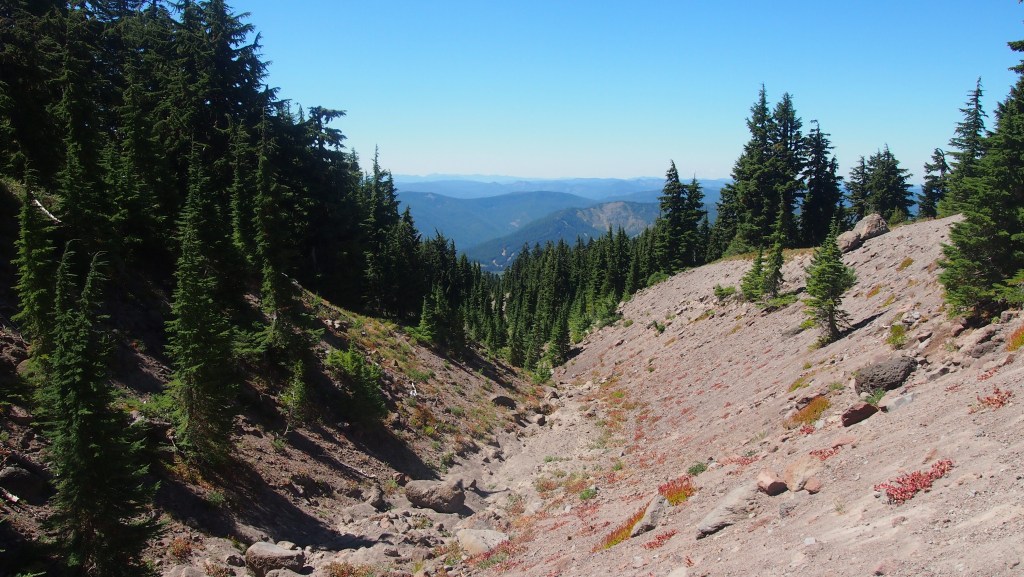
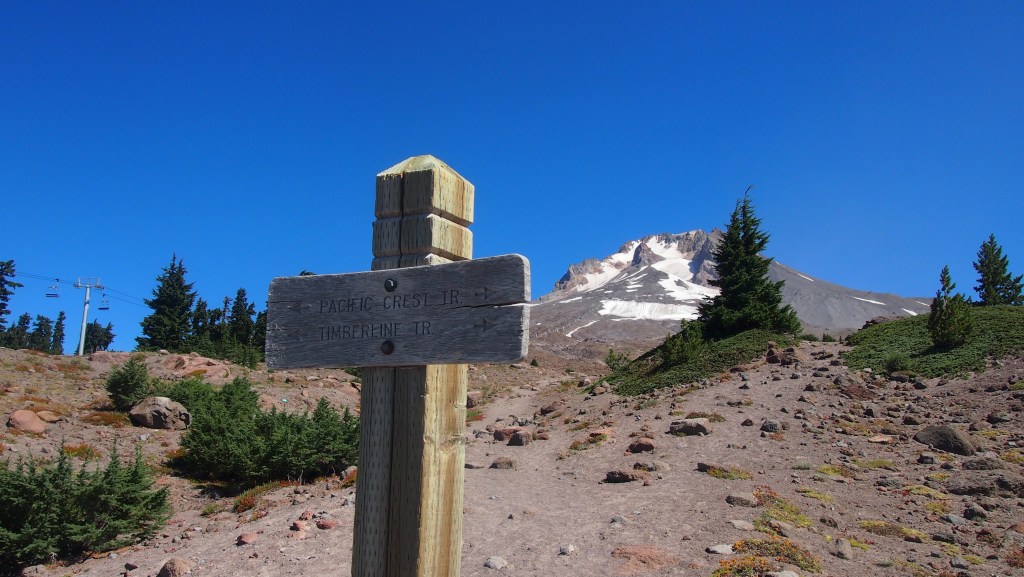
5. Timberline trail, Oregon, USA
Parts of the trail had been affected by rockfalls in the past
Well I can claim to have done a small part of the Pacific Crest Trail- about ten miles!- and this was one of the most accessible bits, from the wonderful Timberline Lodge, where we stayed for three nights, high in the forest, with views across to Mount Hood. My daughter’s friend from America had moved back to the US and we spent an amazing couple of weeks visiting her in Portland and the vicinity in 2015.
Looking towards Mount Hood
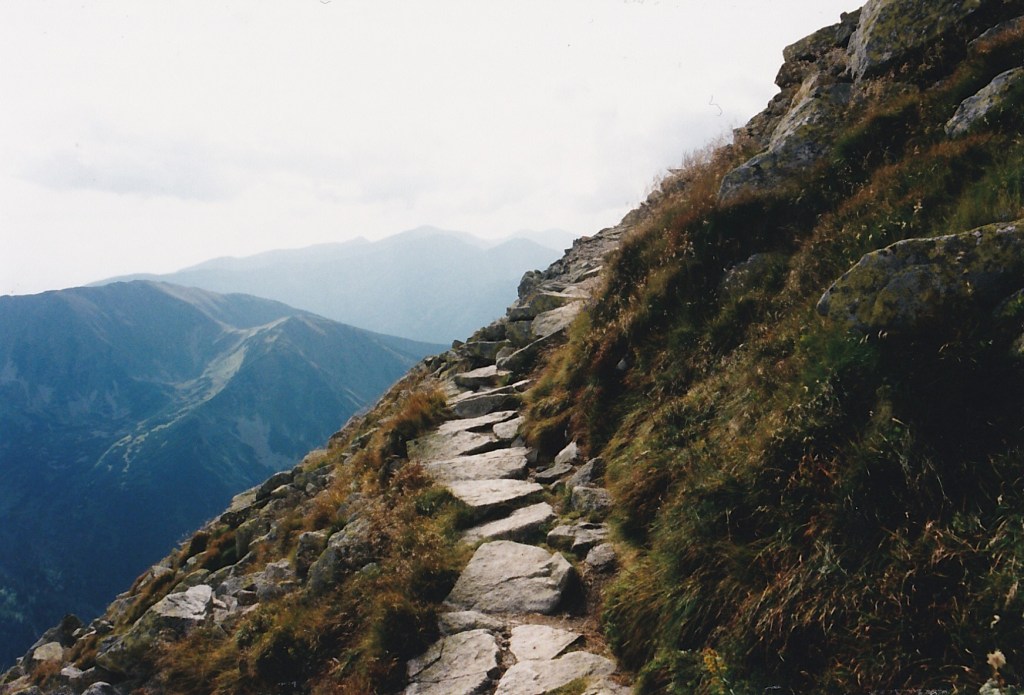
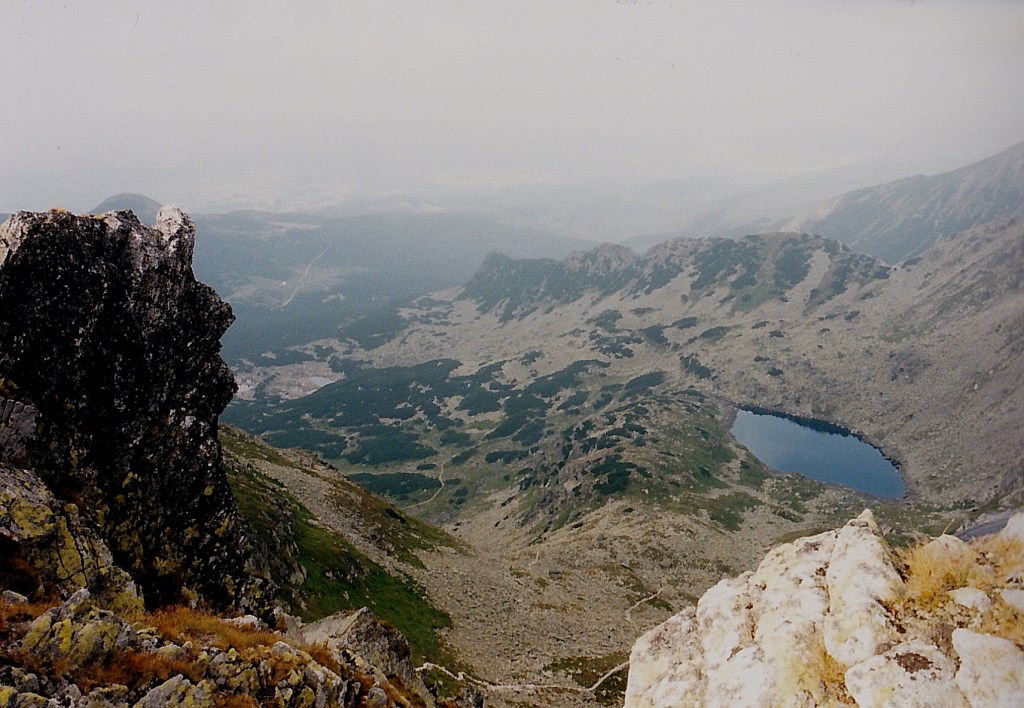
4. Kasprowy Wierch, Tatra mountains, Poland
The mountain path from Kasprowy Wierch
We made the mistake of deciding to catch the cable car at about midday, queued for two hours and then thought why not walk down? Not a terribly good idea when your wife is pregnant, and the path is as rocky and precarious as this one.
But the walk was beautiful and the memories will always stay with us, despite the fact that it was a lot further down than we thought and we ended up walking down in the dark, using only a torch. Luckily we weren’t the only ones and there were strategically placed minibuses waiting for late walkers at the bottom of the mountain to take us back into Zakopane.
The view from near the top
3. Pasterze glacier, Grossglockner, Hohe Tauern National Park, Austria
Looking back to the Pasterze glacier
Well I have done two small parts of the Alpe Adria trail already, including this part, the first half day of the trail. We did this one in 2002 for our fifth wedding anniversary. After having actually walked across the glacier- an amazing experience- we walked down towards Heiligenblut. I’m looking forward to doing this part again.
The beginning of Alpe Adria trail!
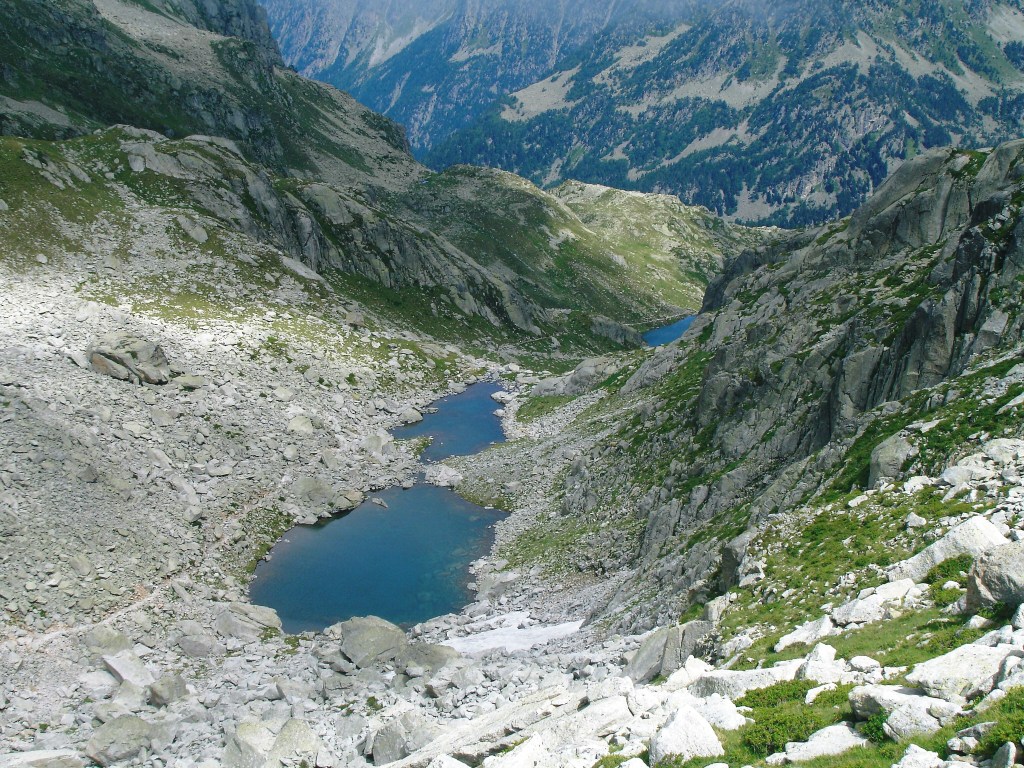
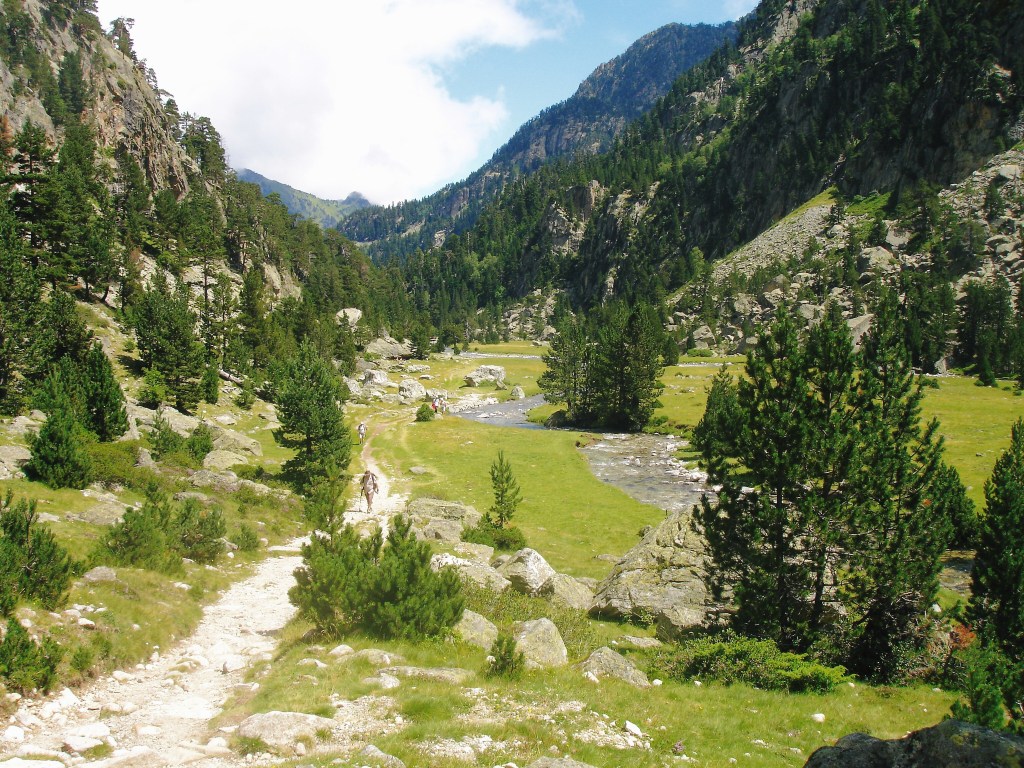
2. CircuitDes Lacs, Valle de Marcadau, Pyrenees, France
Some of the many mountain lakes on this amazing circuit
I’d nearly done this walk in 2001, but the weather hadn’t quite held, so I’d just walked in the Valle de Marcadau, which is stunning enough. But this circuit is incredible, with a succession of mountain tarns in the dips between the mountains. I’d left my wife Jeni and daughter Rachel at the bottom and decided to do this walk in a clockwise direction as suggested in the English guide book. Everyone else was doing it the other way, and right at the end I had it to myself.
Unfortunately a rockfall has obscured the decent path and I came off it , lost my way and ended up hanging precariously from a spindly tree on a very steep hillside. Totally stuck, luckily I had a mobile signal and I called Jeni, and she called the mountain police. They sent a helicopter out, but by this time it was too foggy to attempt rescue this way, so they dropped off two rescuers who located me and led me to safety. I really thought I’d had it. They were great and drove me all the way back to Cauterets where we staying. I have never been so grateful.
Despite this, I’d do the walk again, but the other way around!
The Marcadau valley
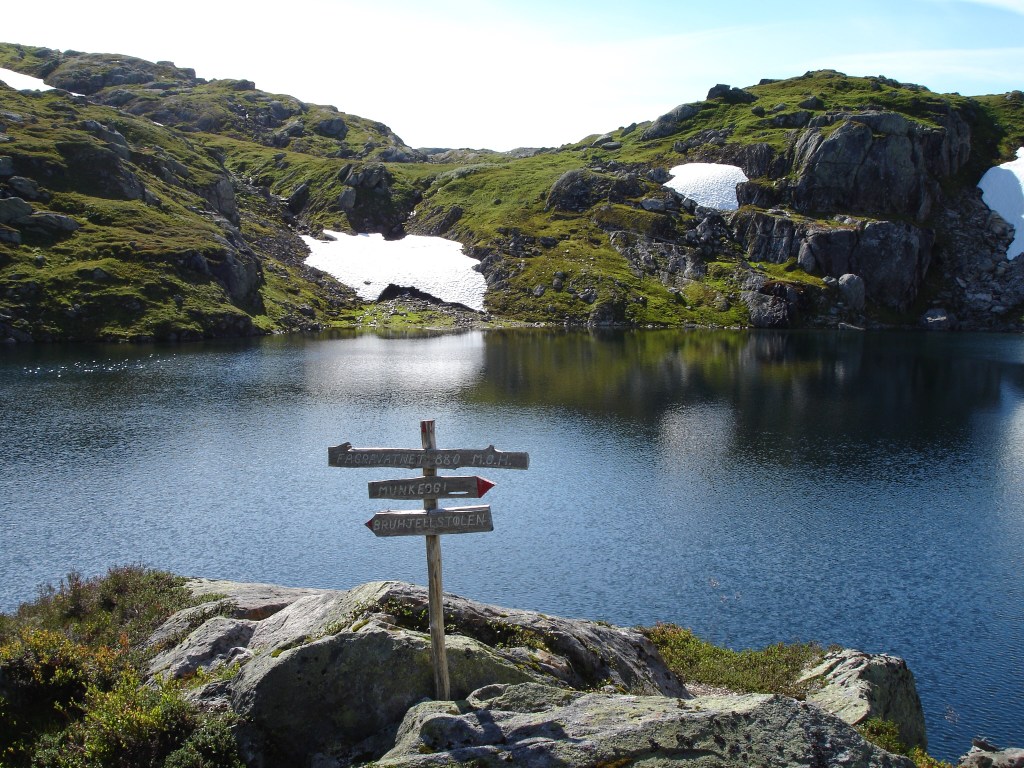
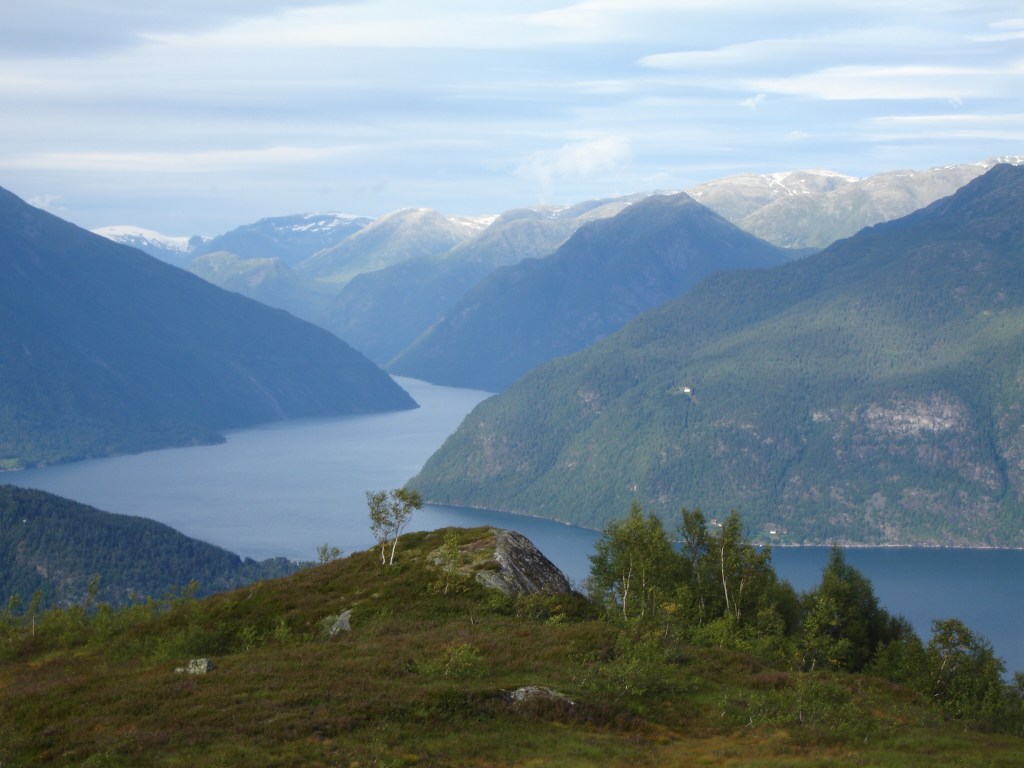
1. Balestrand high circuit, Norway
Every view was stunning
I did this walk on a whim. No guide book recommendation. Just a map and followed the red paint marks. I literally did not see a soul all day. The weather was superb, but despite it being August there was lots of snow at the top, which made it tricky.
The day after it rained, and then it snowed, so was so glad I did this. But it was a bit of a risk that I’m not sure I’d take these days without knowing what was in store. So many different views, all incredible. What a great place.
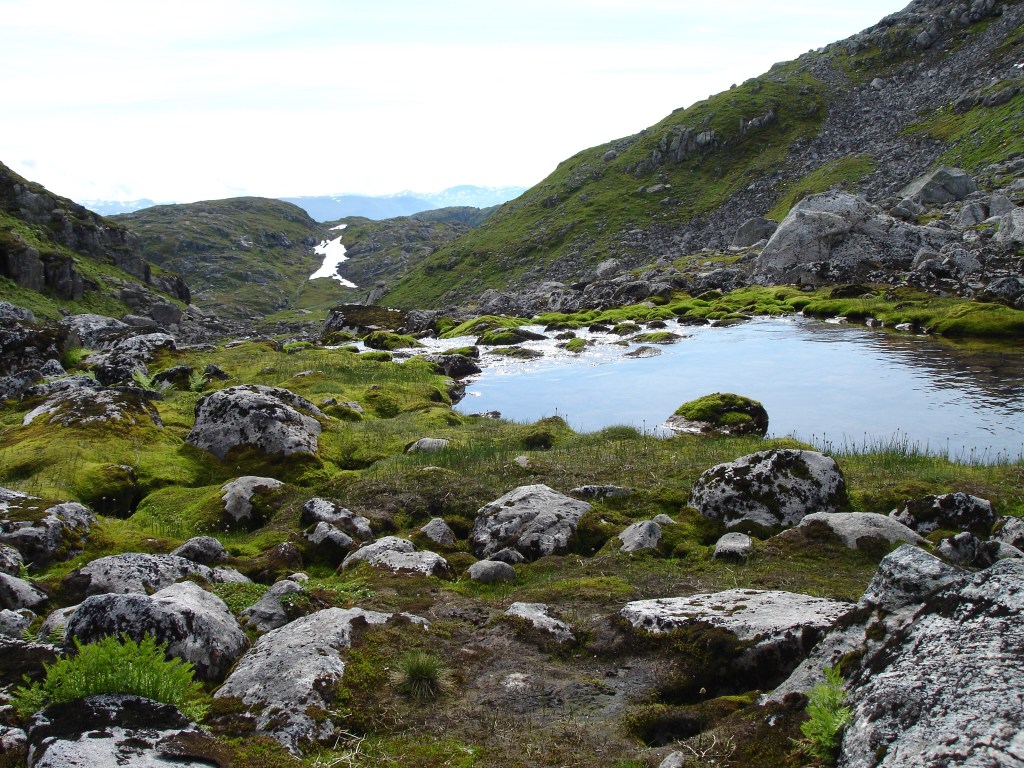
Looking down on BalestrandVivid green moss and patches of snow contrasted with blue sky and mountains.
Well, that’s it. My top ten, so far. You’ll notice that there weren’t any British walks in there. I nearly included a Scottish one, but I thought, on balance it was outpipped by others. But I’ll try and do a best 10 in Britain as another blog post at a later date.
When I tell people I’m going to spend two months walking a trail this summer one of the first things they ask me is how far and how much a day.
Well, going by the guide book, it’s some 750 kilometres in total, but when you add the individual days, including the ‘ring of three countries’ loop, I get a total, from the same guide book, of 757 km, or about 473 miles.
Of course in reality, allowing for walking to and from where I’ll be staying, the twists and turns, ups and downs of the trail, and no doubt a few false turns, I reckon I’ll be walking at least 500 miles.
So when I picked up a walking magazine promoting the idea of walking a 1000 miles in 2020, I thought, why not? I need to get in shape for the trek, and during the year I do several hundred miles in day hikes. Plus I’ve taken to doing circuits of the local park on days when I’d otherwise do no exercise, and I walk at least a miles to and from the office each day. So I think it should be manageable and it’ll be a way of making sure I get in shape for the summer.
Of course, the distance is only the half of it. According to the guidebook, I’ll be walking around 30,000 metres in ascent, and 33,000 metres down, equivalent to more than three ascents and descents of Everest. Or a lot of flights of stairs…
Per day, it’s between 10 and 28 km, or 7 to 17 miles in distance, but there are two days up of 1500 metres climbing each. Now I’ve climbed 2,000 metres in a day before- as it turned out in a great deal of pain, due to ill fitting boots – but I was lot younger then….
Inspired by movies like Wild and A Walk in the Woods, the pilgrimages people make walking the Camino to Santiago , and my own experiences walking routes like the Pennine Way and the Stevenson trail, I wanted to do my own trek through the mountains. This time, not just a “holiday” but an adventure, something lasting at least a couple of months, where I’d really get the chance to connect with nature, escape the rat-race, and gain a sense of achievement.
I’d already tried, and eventually given up, having to carry my own bags across the Alps once before, doing the Alpine Pass route in 2004. That was tough, and I’m not getting any younger. Back trouble caused by years of office working meant that realistically I wasn’t going to be able to manage carrying all my gear for two months along something like the Appalachian trail. So when a brochure advertising a new route across the Alps, where your bags could be carried the whole way, and you could stay in a comfy hotel bed every night fell out of a walking magazine I was reading, I knew this for me. Four years later, and with an understanding wife and employer, plus exceptionally helpful staff in the Carinthian, Slovenian and Tarvisio tourist office, this dream is about to become a reality in summer 2020. The Alpe Adria trail is about 750 km long, stretching from Gross Glockner in the Hohe Tauern national park in Austria, through the beautiful Soca Valley of Slovenia to the vineyards of Fruili Venezia Giulia in Italy, near Trieste.
And what better opportunity to highlight and help the predicament of the world’s most trafficked creature, the pangolin, who through no fault of its own finds itself threatened around the world due to the demand for its scales and bushmeat. As an animal that it has not proved easy to keep in captivity, it’s essential that projects around the world are supported to help these creatures survive before it’s too late and they disappear for ever. So if you’re reading this blog, please do donate to one of the charities supporting pangolins such as savepangolins.org , Fauna and Flora International or the David Shepherd Wildlife Foundation. And spread the word that we desperately need to do more to help these beautiful and unique animals survive in the face of human exploitation.
 Across the Alps to the Adriatic