Well I’ve seen plenty of the Alps, and, since leaving them behind, the hills and vineyards on the borders of Slovenia and Italy. Today I finally had my first glimpse of the Adriatic Sea.
Originally today was to see me hiking from Gradisca d’Isonzo to Sistiania, a long hike comprising the whole of stage 33 and the first couple of miles of stage 34 of the AAT. A couple of weeks ago, though, wildfires (or arson) closed the whole of stage 33, and although the fires were put out, they had started up again more recently. I was advised not to attempt this stage of the route even if was technically ‘open’ – it was unlikely to be an attractive sight after all of that damage in any case.
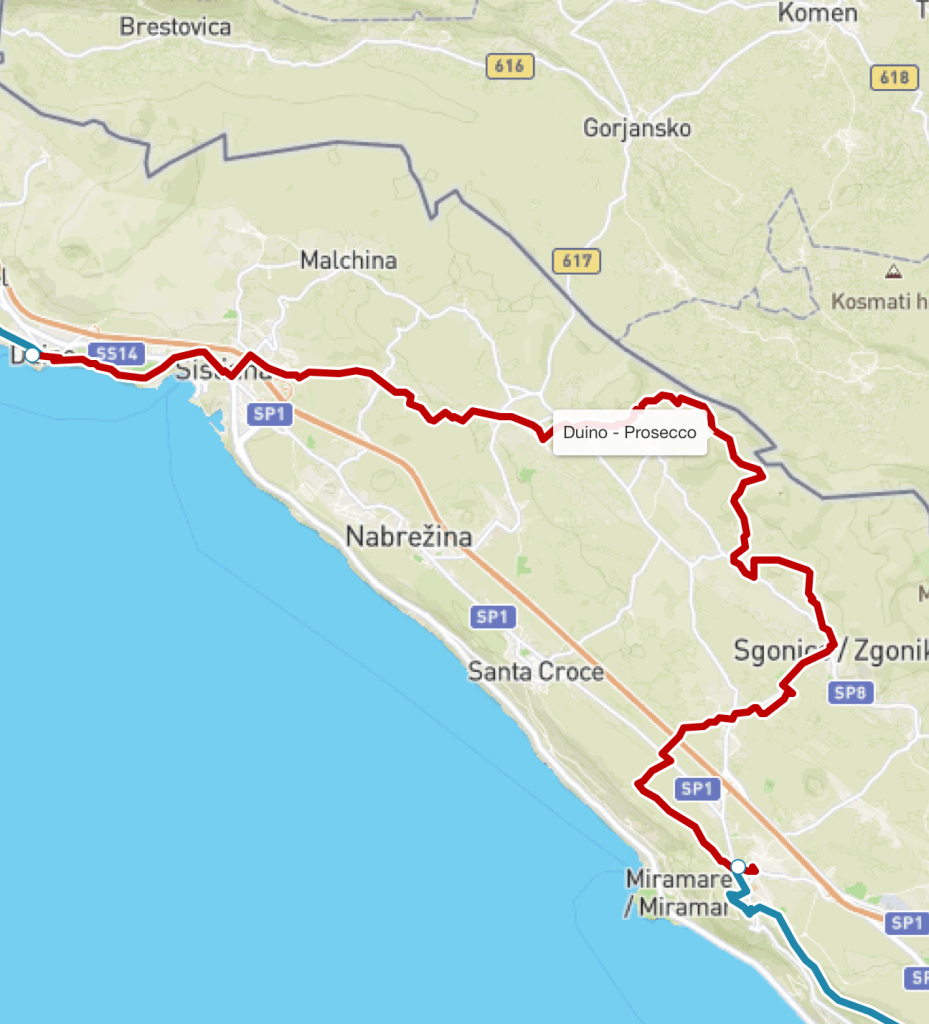
So instead I aimed to walk just the first little part of stage 34, from Duino to Sistiana, along the so called Rilke path, and take it easy the rest of the day . But even that was in doubt, as I had reports that yesterday the Rilke path had itself been shut because of fires. Luckily, today that turned out not to be the case.
Having caught the bus from Gradisca to nearby Trieste airport, and then on to Duino, I got out at a stop on an inauspicious busy road, by an out-of-town shopping centre. Walking back a couple of hundred metres I spotted the Alpe Adria sign on a lamppost, and the entrance to the Rilke path.
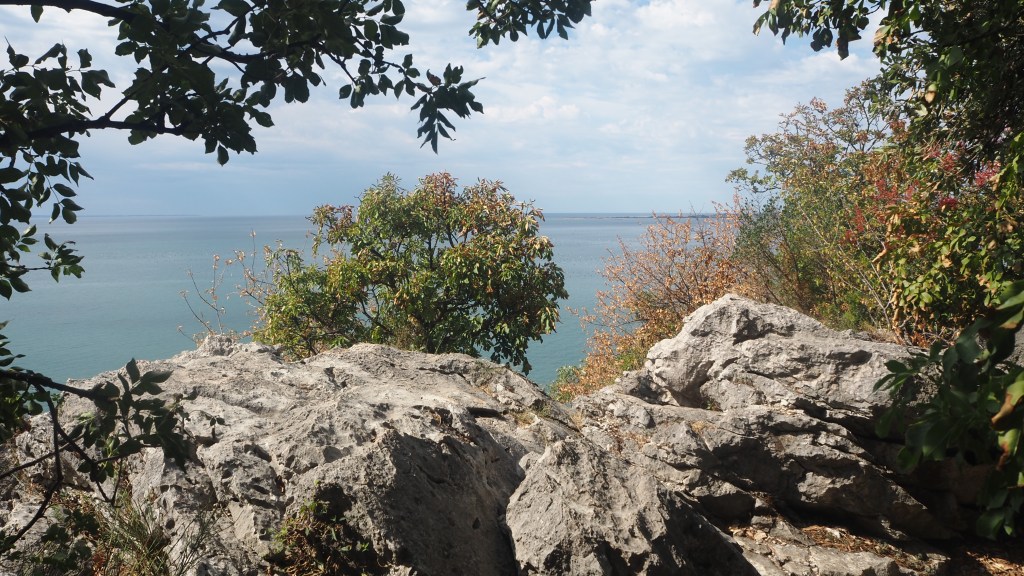
There was a big sign with symbols warning you what you weren’t allowed to do here, including, it appeared, playing a trumpet. The path itself was marked by a neat and tidy border of stones and there were constant warnings not to divert from the path or climb on the rocks, (something which apparently has led to a number of deaths). Within a couple of minutes the path emerged from the wood to my first view of the Adriatic. Here I finally was, at the sea that marks the end of the trail, albeit with still a further four days walking before my end destination of Muggia.
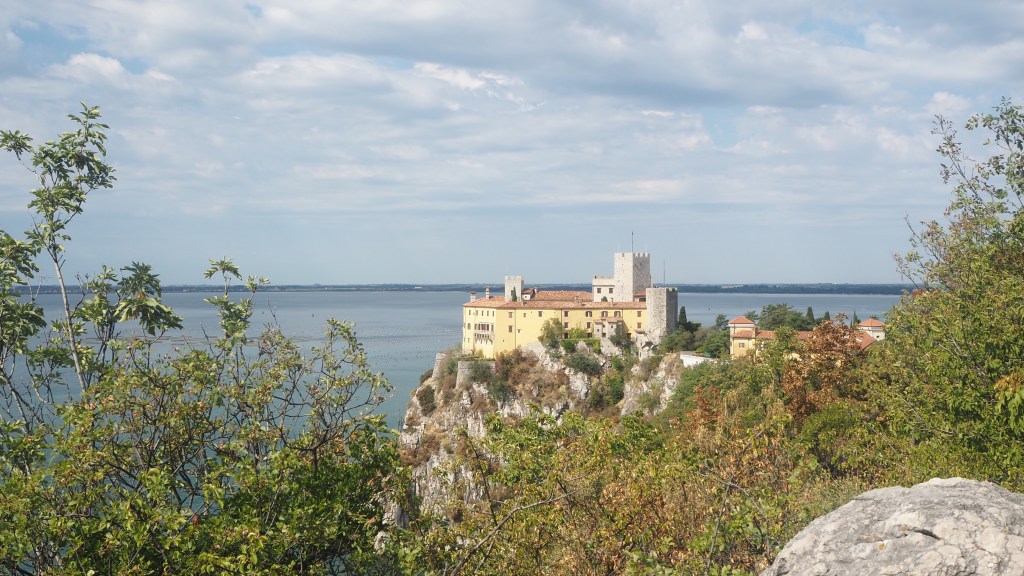
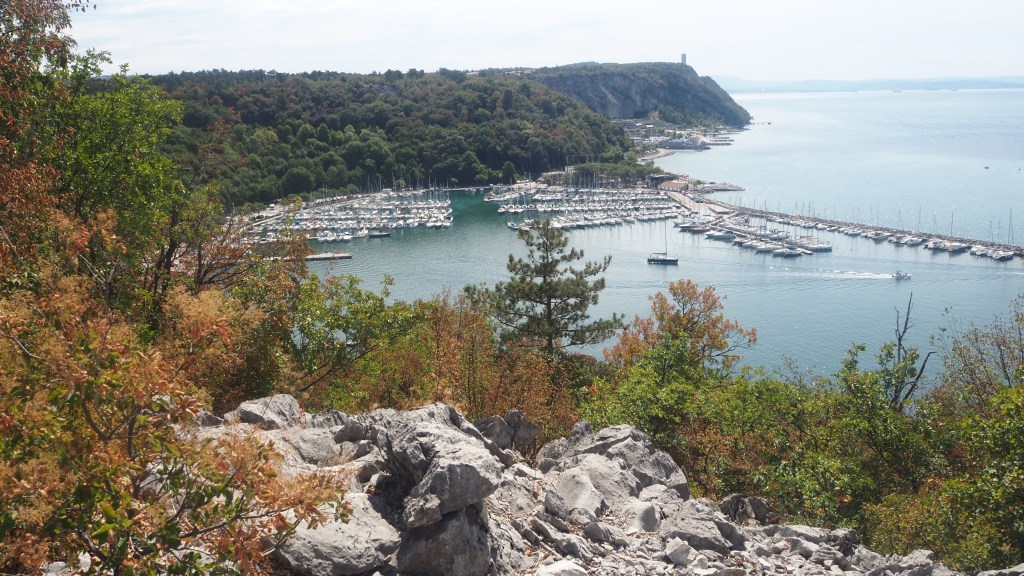
The next hour and half was perfection itself. A lovely easy level walk on top of the cliffs with periodic views out to sea, with Duino castle behind me and the marina of Sistiana ahead, framed by a rocky coastline.
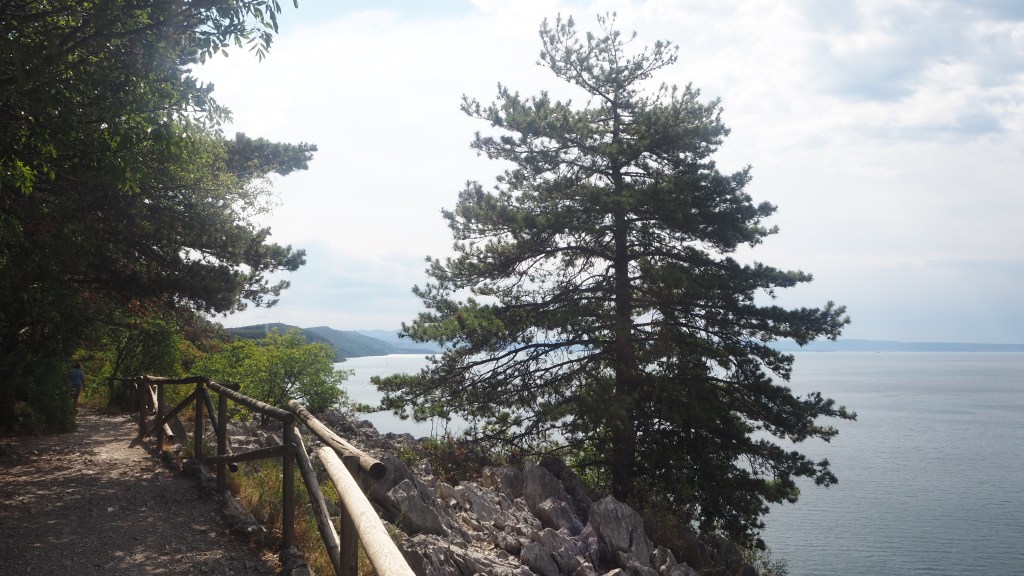
What a change from vineyards. I felt like I was on finally on holiday as people strolled past in flip -flops and beachwear. It was a lovely route, gradually becoming less shaded by the trees and more open to the coastline as it progressed. A little rocky underfoot ( I wouldn’t like to tackle it in flip -flops) it was mainly level and as it approached Sistiana there was cliff top café where I stopped for an Italian coffee and ice cream.
To be honest it just reveals that sometimes you really don’t need the pain for the gain. No hot tiring climbs, or descents where you have to watch every step. Not hours and hours of walking, just a lovely coastal stroll.
Beyond I came to a tourist office, which I popped into, to see what I’d could do with rest of the day. A chance glance at an advertisement for cave tours, and a helpful adviser, led me to taking a visit to the nearby Grotta Le Torri di Slivia caves later that afternoon. I love show caves, and where better to go when it’s hot out knowing that underground it’s a constant 10 degrees or so.
According to my map, the caves were 2 or 3 km down the road, at a turn off, so I left myself plenty of time to walk there, and when I arrived the tractor- hauled people trailer sitting in the farm yard featured in the advertising reassured me I was in the right place. It was small scale tourism based around the farm. The tour was at 5:30 and I was half an hour early, and about ten minutes before it was due to start the tour guide, Carrado, arrived.
No one else had booked or showed up, but the tour still went ahead. Carrado drove me down a stony track, under a motorway to what looked like a scrubby bit of land between fields. He got out, went to turn on a generator to power the cave’s lighting, and unlocked the door to the cave, hidden behind some hoarding and a bush.
When you enter a cave within seconds you become aware of the change in temperature, the same all the year round, whatever it’s like outside.And inside, needless to say, like mountains, every cave and cave system is unique. The first thing I saw this time was a small flurry of bats flying around inside, but while they were visible from time to time during our visit, mostly they kept out of our way.
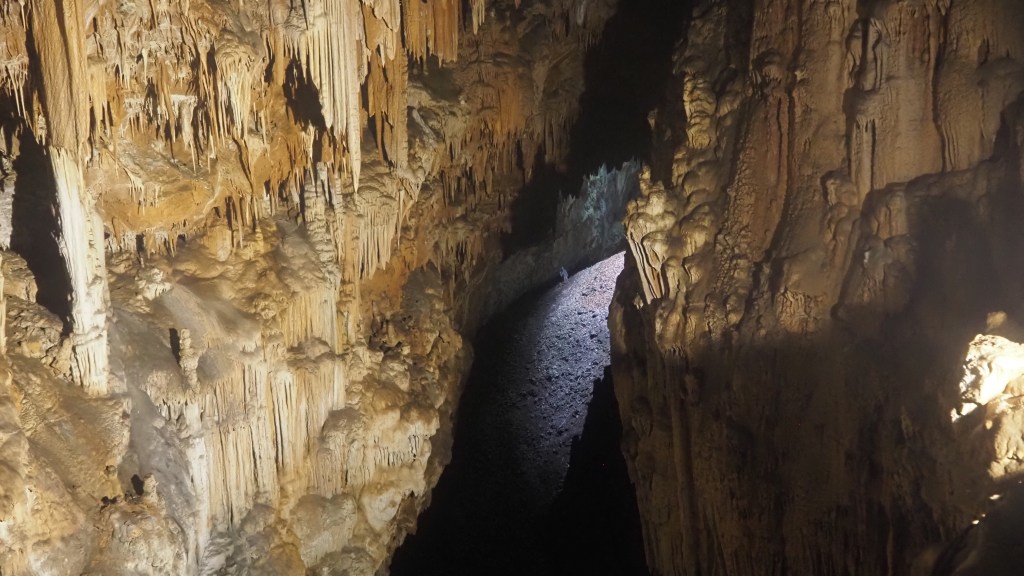
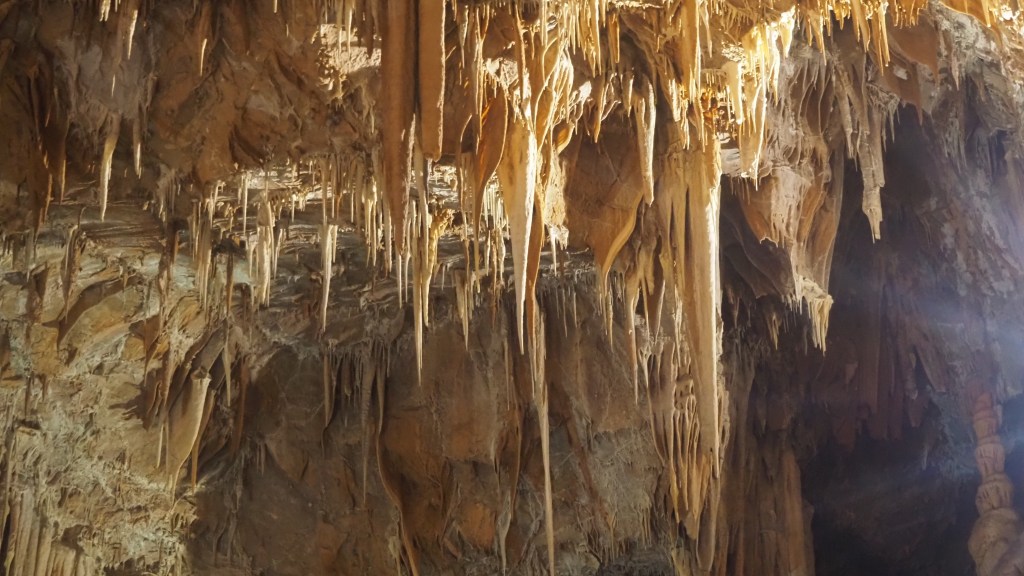
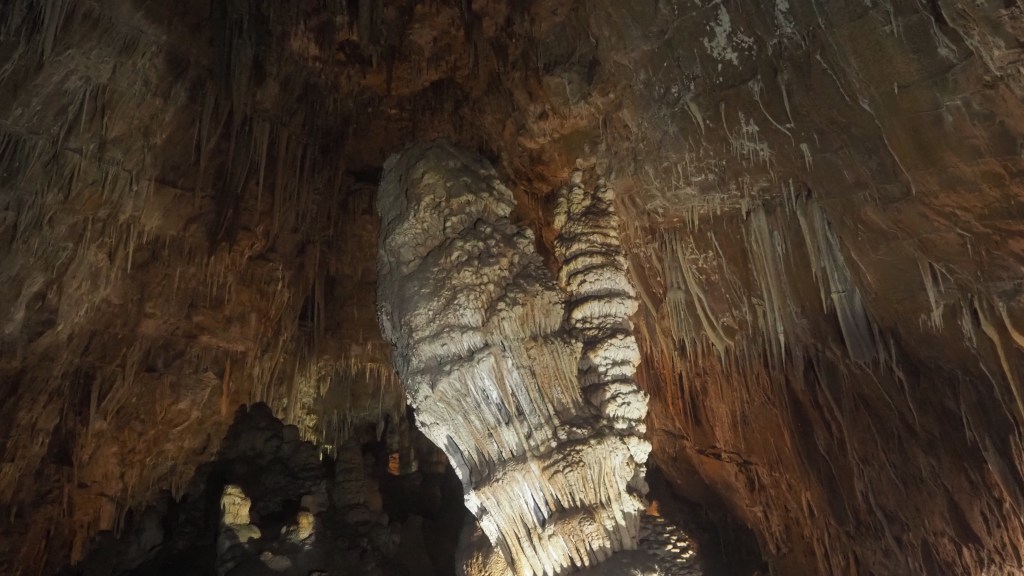
Often when you visit a show cave, whilst they almost always wow you with their displays of weird shapes, mineral deposits, stalactites and stalagmites, it can be difficult, when you’re in big tour party, maybe with lots of children, to imagine the awe engendered, the silence and darkness encountered when someone first set foot inside. Here though all I could hear was the occasional drip, or flutter of bats’ wings; and the lighting was targeted and subtle with my guide pointing his torch at features of interest referred to in the commentary.
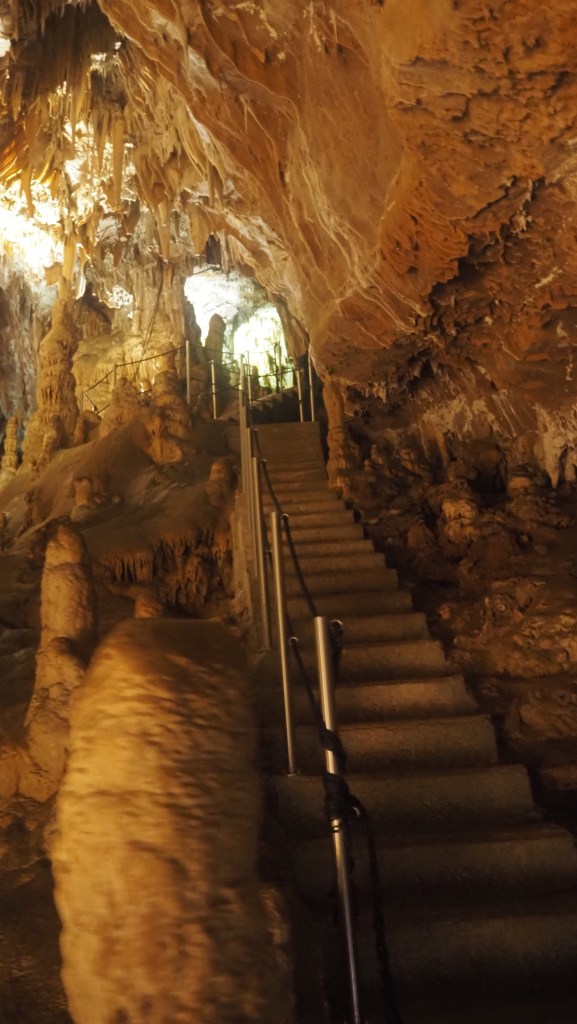
So for the first time ever, I had my own ‘private’ tour of a cave, with a guide and his thoughtfully provided English narration on a device he was carrying. We descended into a number of caverns, saw where the cave extended narrowly beyond the part you could visit, and learned about the different shapes and how they were formed.
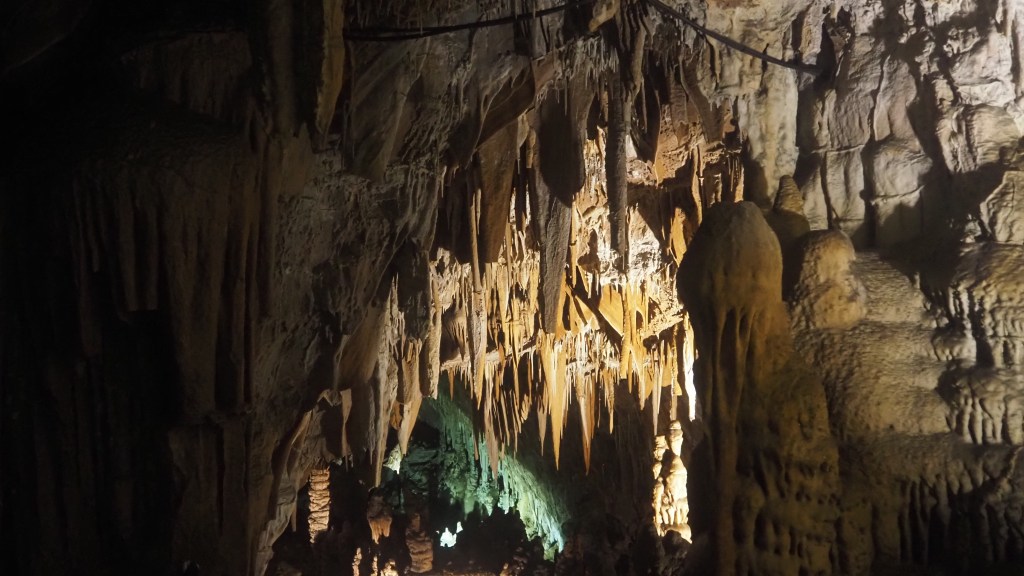
There were stalactites and stalagmites of all sizes, columns where they had joined together and rounded rocks, coloured in red and white, from iron and calcium. Shapes that had taken thousands, perhaps millions of years to form.
I had been expecting quite a small cave or series of caves, so I was very impressed with the enormity of the caverns I was shown around, and that all this was hidden underneath a nondescript field next to a motorway. Apparently, the Karst region, which straddles Italy and Slovenia is full of such caves- thousands in fact-the majority obviously not open to the public.
Pictures never really capture the majesty of the formations or their scale, but if you’re ever anywhere near a Trieste or Sistiana I’d urge you to think about paying the Torri di Slivia caves a visit.
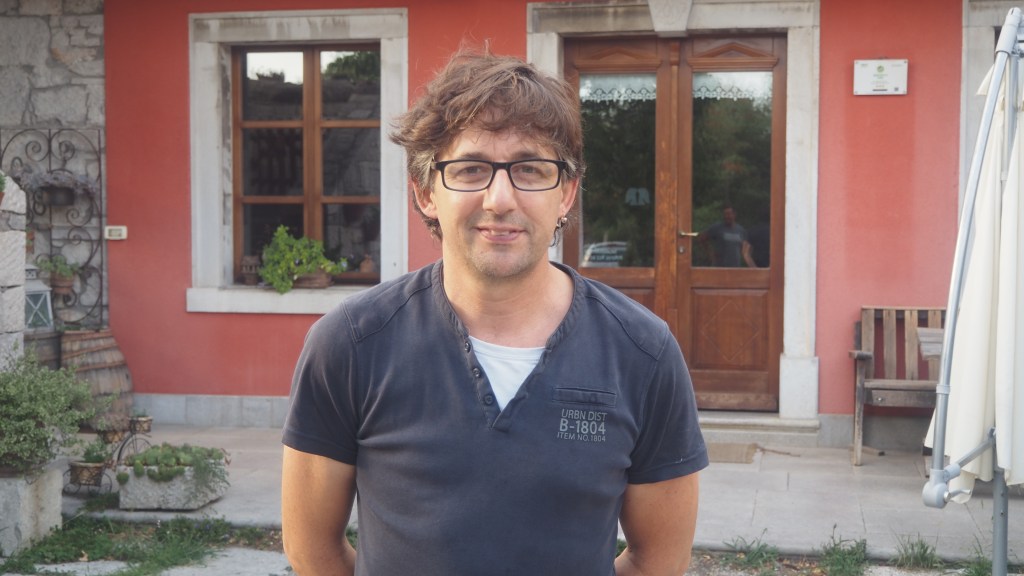
And not only wouldn’t Carrado take a tip, but his English speaking colleague promptly drove me back the couple of miles down the road to my hotel when he saw I didn’t have a car. What nice people.
 Across the Alps to the Adriatic