Twenty three years ago, my wife Jeni and I completed our first long distance walk, the West Highland Way. In Jeni’s case it was also her last, but I got the bug. As the weather turns autumnal, I thought it would be an opportunity to launch an occasional series of posts of some of my favourite long distance walks. And Scotland’s West Highland Way is certainly one of the best.
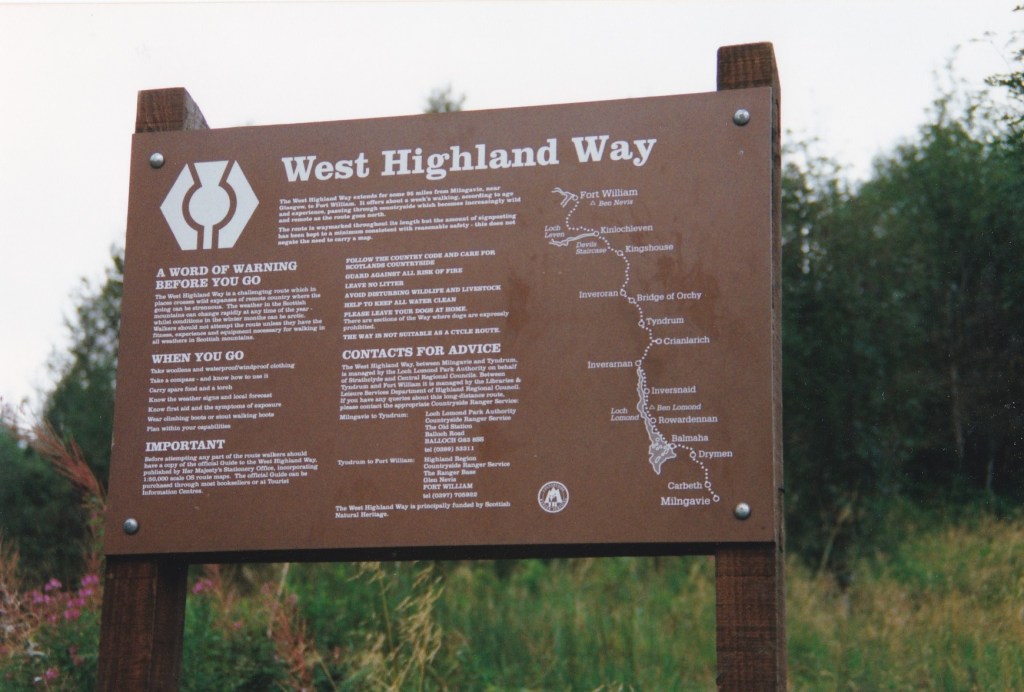
The West Highland Way is deservedly popular, and has, so I have heard, grown ever more so since we walked it in 1997/98. Starting gently on the outskirts of Glasgow at Milngavie (pronounced ‘Mullguy’) it builds quickly to a series of highlights: Conic Hill, Loch Lomond, Rannoch Moor, the Devil’s Staircase, and Glen Nevis. Around 95 miles long, and with a lot of up and down, and some potentially boggy and slippery sections, it could take anything from 5 to 10 days to walk, depending on your stamina, abilities, the weather, and your inclination.
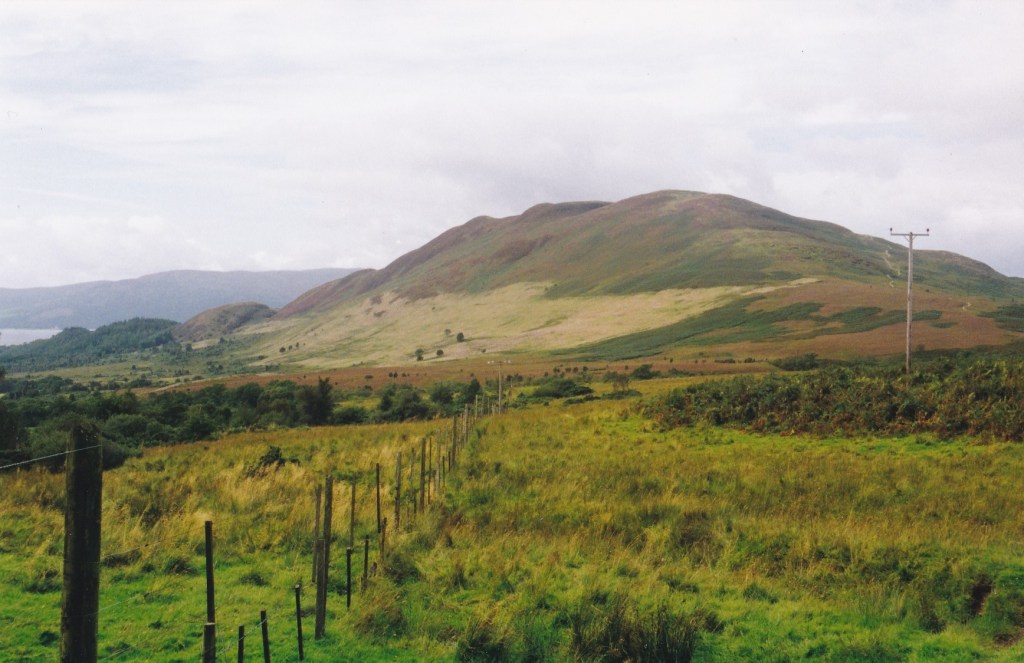
The first real test is Conic Hill, on most people’s day two. Not a huge hill, but one that builds to some fantastic views down the other side- of the magnificent Loch Lomond. When we were there we had our first real experience of ‘all in a couple of hours’ Scottish weather: sun, sleet, hail, wind, and to this day Jeni and I call this Conic Hill weather. I’ve been back since, and can say that it’s much more enjoyable on a sunny, clear day.
Coming off Conic Hill, you reach Loch Lomond at Balmaha, and spend the next day or two walking the entire length of the east side (car free) of the Loch. We had a day of rain, and a day of (mostly) sunshine.
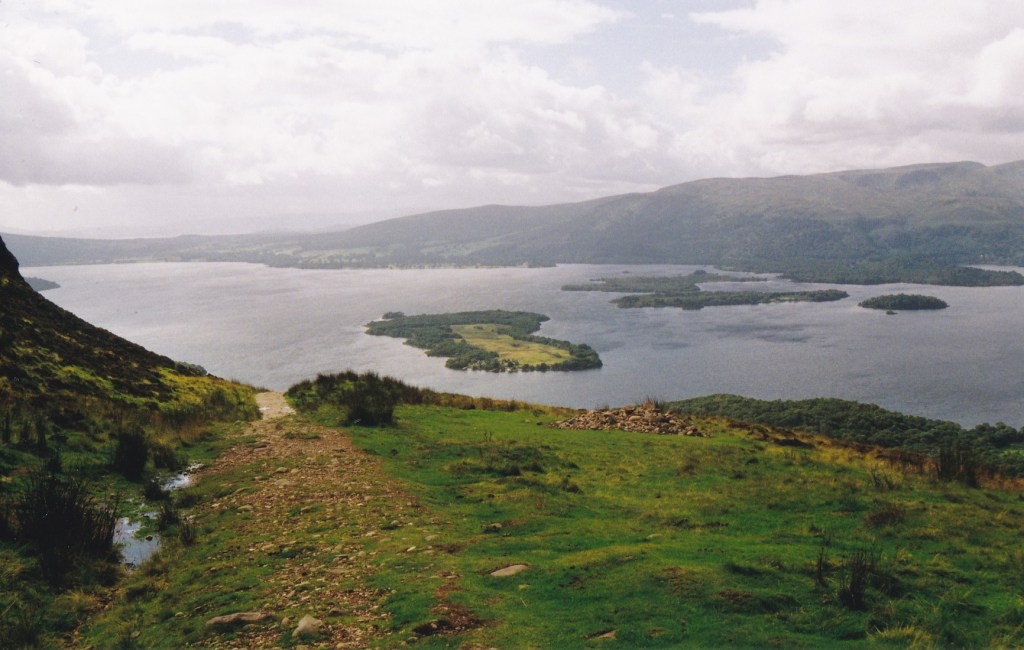
The first part was straightforward, with the trail following the banks of the loch, and then turning inland into forest climbing up and back down several times before rejoining the loch at intervals, although you never stray far from it. Our second day was a long one (not helped by my injuring my ankle the day before after jumping from a rocky step too heavily) and took us from Rowardennan, where there is a youth hostel, to Inverarnan. An amazing walk with the loch always to your left, and several stretches where you are slowed down as you clamber rocks or negotiate a path through. It’s also long… so Inverarnan’s Drovers’ inn is a welcome stop at the end as you arrive at the north end of Loch Lomond.
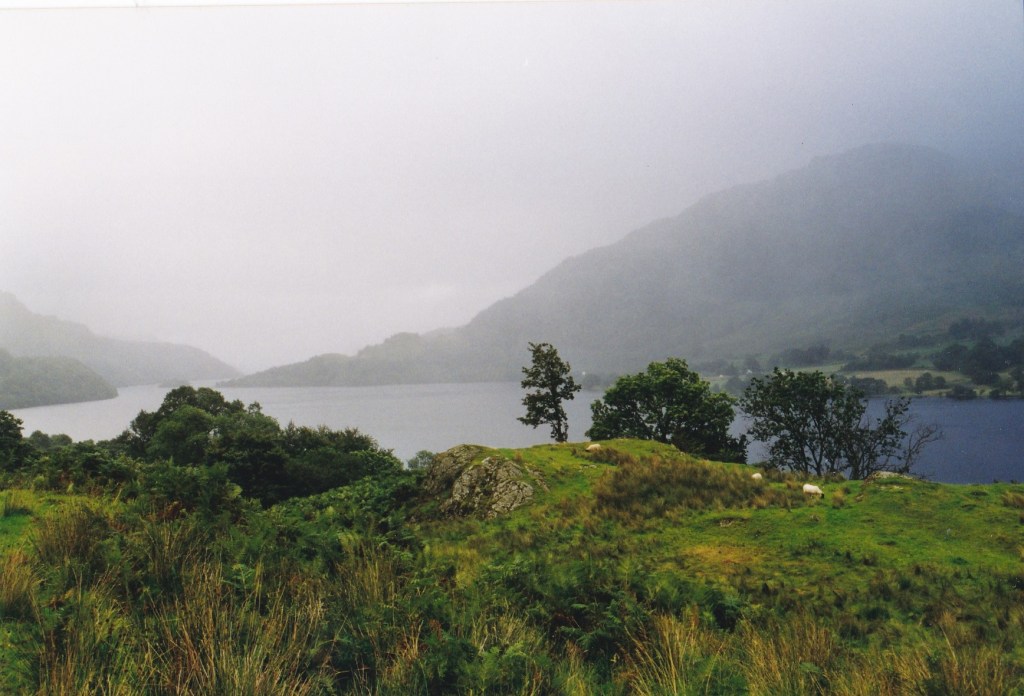
The next day or two takes you along General Wade’s old military road (one of several built by the English for their troops fighting the Scots in the eighteenth century) and quite painful to walk on in places; and then alongside the road and railway (including its remarkable horseshoe bend) of Strathfillan.
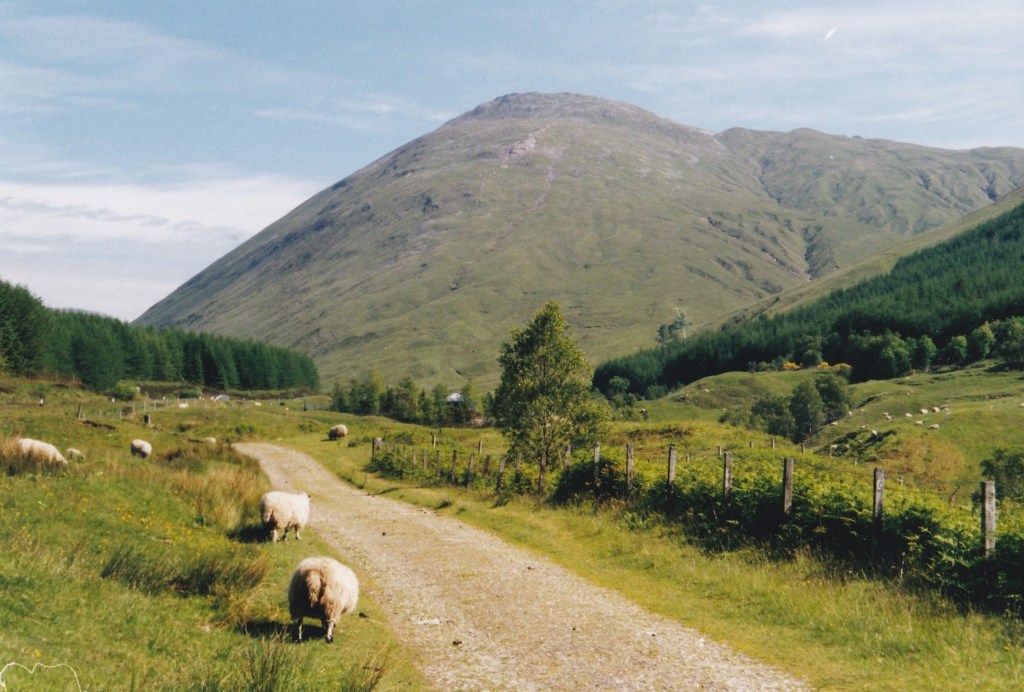
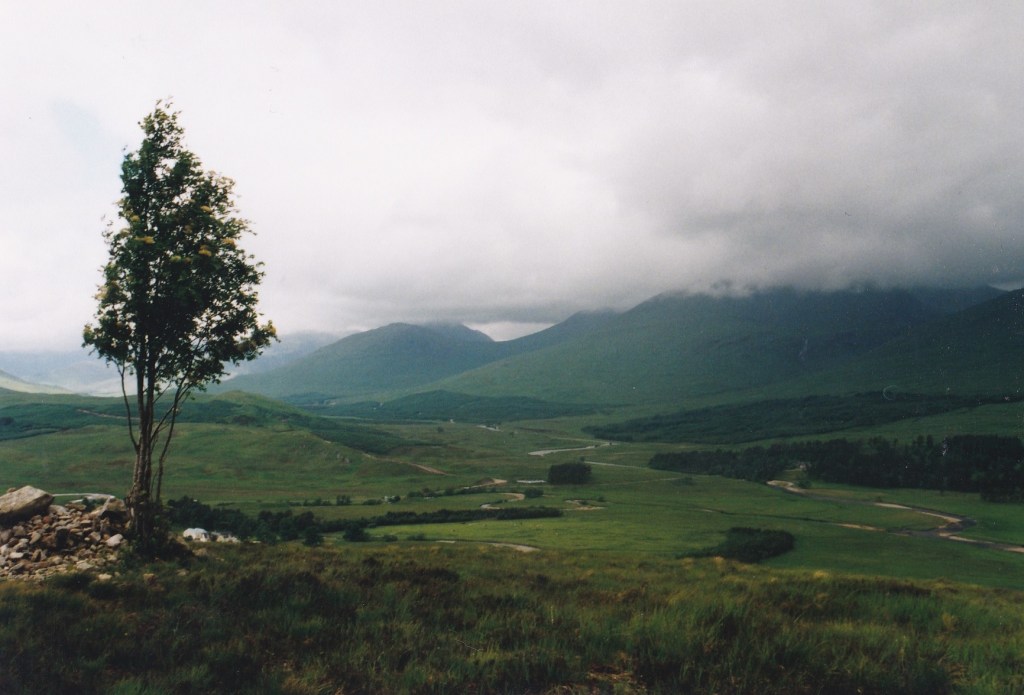
The longest day for us followed, across Rannoch moor, starting with a climb above Loch Tulla, before becoming wilder, leaving plantations behind, when you experience first the bleakness, and then the grandeur, of the moor itself. I’ve already written on one of my previous posts that this remains one of my favourite places, but even so, at the end of the day, the isolated Kingshouse hotel, is a welcome sight.
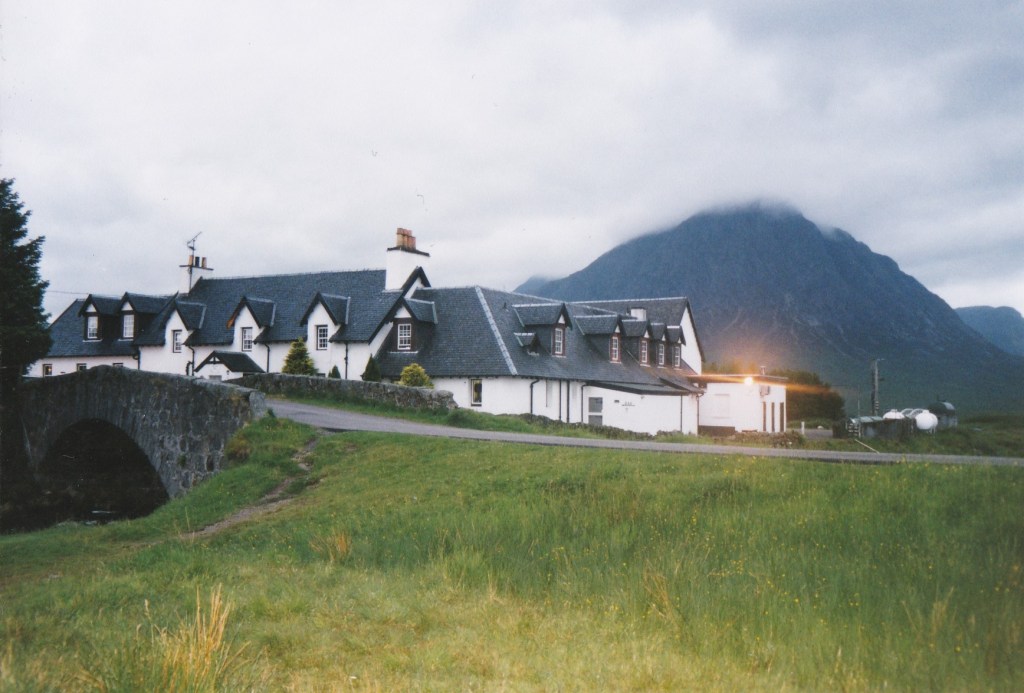
The hotel has been there since the eighteenth century, and its setting is second to none. When we were there it was a quirky mix of the original and a variety of additions and fittings from what looked like the sixties and seventies, and retained the smell of drains reported by Wordsworth two hundred years before! I still remember the deer coming up to the picture windows in the lounge for food scraps as the sky darkened (around 11 pm in June, when we were there)- a truly magical sight. The recent redevelopment has been controversial- not for the demolition of the ugly twentieth century additions, but because of the size and design of the new extensions, but undoubtably it will enable more people to experience a night there, and unless you are camping, the only other option is to catch a bus to Glencoe.
Our next day was a washout, so we didn’t really see the Devil’s staircase, which I’m told is one of the highlights of the walk. Hopefully, one day I’ll get back and do that on a clear day.
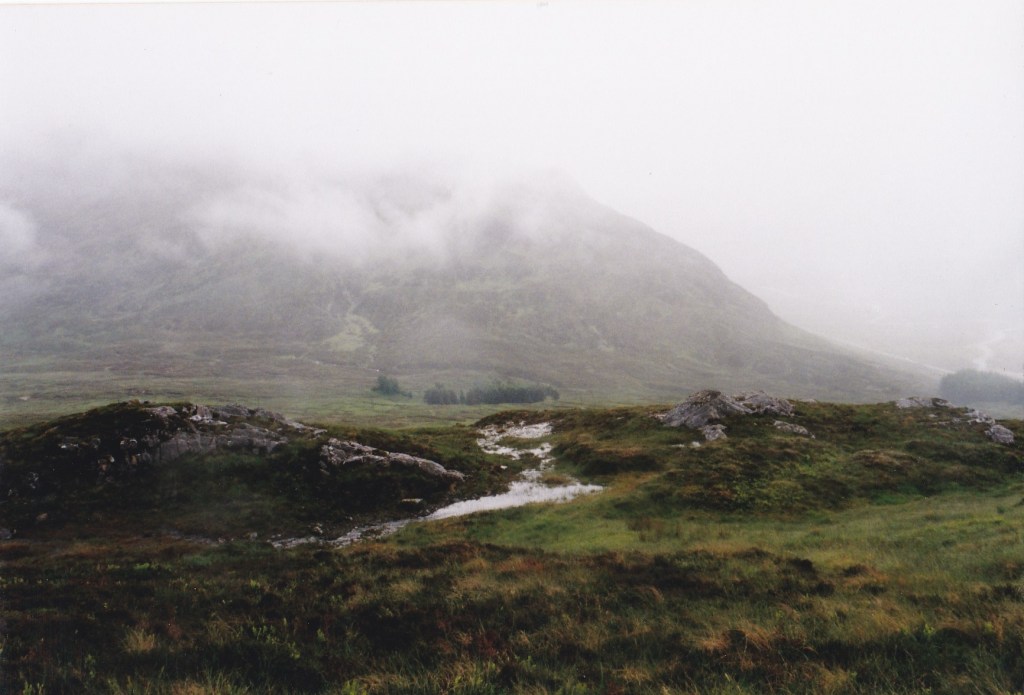
The final stretch , an unavoidably long day from Kinlochleven to Fort William, is a real highlight. It starts with a climb, then a long walk past abandoned farmhouses, before a varied series of climbs and descents through forest, past trickling streams and open areas with expansive views as you approach Glen Nevis and the mighty Ben Nevis itself.
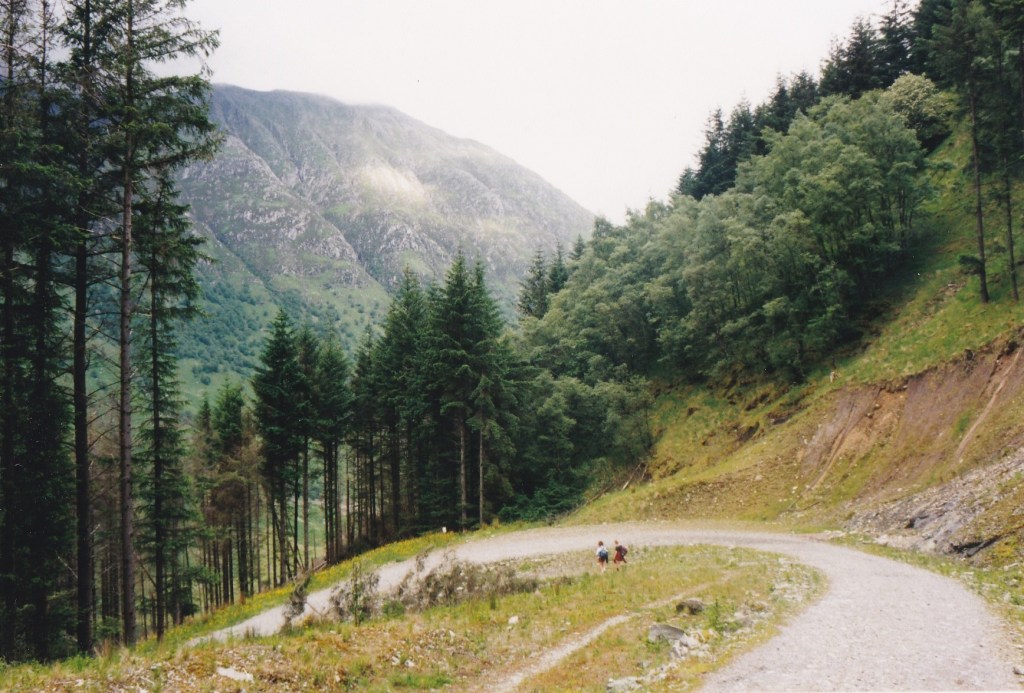
Some people round off their trip with a climb of Ben Nevis. We were very happy instead to follow the walk with one of the most scenic bus rides in Britain, surely, from Fort William to Portree on Skye, reached by the bridge from the mainland, and a relaxing few days on Skye, before travelling home.
Overall, I would say the West Highland Way is a moderately difficult walk, which requires some preparation, to be reasonably fit, and the right sort of kit to contend with the changeable Scottish weather. We actually did it in two parts, in September and June, and managed as a result to avoid the worst of the midges. While it’s not to be underestimated, it should be within most walkers’ capabilities, certainly if you, like us, take advantage of one of the bag carrying services offered.
Book ahead though as it’s popular and accommodation thin on the ground. It’s well worth it and makes a memorable and enjoyable introduction to the highlands. I can still remember it vividly all these years later, which says a lot.
 Across the Alps to the Adriatic